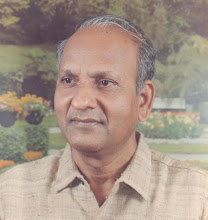
Prof.T.Shivaji Rao
Director, Center for Environmental Studies, GITAM University, Visakhapatnam
(This article is both in English and also in Telugu (as published in Eenadu on 14-1-1993 and the same is presented as scanned picture below this article)
http://www.nirs.org/reactorwatch/licensedtokill/LiscencedtoKill.pdf
http://www.nrc.gov/about-nrc/emerg-preparedness/about-emerg-preparedness/planning-zones.html
DO VISAKHAPATNAM PEOPLE KNOW THAT THEY ARE WITHIN ZONE OF INFLUENCE OF EMERGENCY ACTION PLAN DUE TO KOVVADA NUCLEAR ACCIDENT ?
http://desastres.unanleon.edu.ni/pdf/2002/noviembre/pdf/ENG/DOC13731/doc13731-contenido.pdf
Nuclear Accident influence Zone is upto 100 km.in Finland for Emergency Response Actions ,WHY not such protective actions be taken by authorities in INDIA to save the people...??
http://www.bellona.org/articles/articles_2011/rosatom_report[Russaian safety report]
http://www.nytimes.com/2011/06/02/world/europe/02germany.html?pagewanted=all
http://www.osti.gov/bridge/servlets/purl/102183-vTsUij/webviewable/ [Accident modelling]
http://www.remm.nlm.gov/nuclearaccident.htm#figure1 [Reactor accident modelling]
http://tshivajirao.blogspot.com/2011/08/diaster-consequences-of-kovvada-nuclear.html [Excellent]
[It presents actual villages and towns and cities that will be ruined due to a Reactor Accident ]
http://www.ccohs.ca/oshanswers/phys_agents/ionizing.html
[ Conversion of radiation Exposure in Air to radiation Dose absorbed by body]
http://projectpangaia.wordpress.com/2011/05/21/nuclear-catastrophe-vs-alternative-energy/
[Excellent Eye-opener Videos on Chernobyl accident and Global impacts+Fukushima scenarios]
http://allthingsnuclear.org/tagged/Japan_nuclear {Fukushima Video]
http://www.oecd-nea.org/press/2011/BWR-basics_Fukushima.pdf [Fukushima Reactor]
http://www.greenpeace.org/eu-unit/en/News/2011/companies-back-100-percent-renewables-25-01-11/ Alternate Energy Sources for Nuclear plants]
http://www.japantoday.com/category/national/view/yoko-ono-says-japan-should-look-to-geothermal-energy [Japan has Geo-thermal Sources as Alternatives to Nuclear plants]
http://www.thehindu.com/opinion/op-ed/article1770465.ece [Natural Gas as alternative in India]
http://2sustain.com/2011/01/greenpeace-report-shows-europe-could-convert-to-almost-entirely-renewable-energy-resources-by-2050.html
http://www.ansn-jp.org/jneslibrary/PWR_Safety_Design.pdf [Reactor safety Design,Japan]
http://www.frontlineonnet.com/fl1713/17131020.htm [Safety violated by Government of India]
http://www.greenpeace.org/india/en/What-We-Do/Nuclear-Unsafe/Safety/Nuclear-accidents/Nuclear-accidents-in-India/Accidents-at-nuclear-power-plants/ [Indian Reactor Accidents]
http://bhujangam.blogspot.com/2011/08/unsafe-nuclear-reactors-in-india.html
http://www.indiastudychannel.com/resources/139114-Nuclear-accidents-India.aspx
http://www.indiastudychannel.com/resources/138996-Nuclear-accidents-reasons-safety-measures.aspx
http://en.wikipedia.org/wiki/Nuclear_power_in_India#Accidents
http://ec.europa.eu/research/energy/pdf/off-site_nuclear_emergency_mangement_en.pdf [European Nuclear plants accidents scenario-Chernobyl calculations]
http://www.iaea.org/Publications/Booklets/Chernobyl/chernobyl.pdf
http://bhujangam.blogspot.com/2011/08/probable-nuclear-reactor-1100-mw.html
http://www.nirs.org/reactorwatch/licensedtokill/LiscencedtoKill.pdf
(Killing fishes and marine life due to reactor effluents,
cheating by nuclear industry pages 101 and 104)
http://georgewashington2.blogspot.com/2011/04/ap-risk-of-nuclear-catastrophe-could.html http://www.nrc.gov/about-nrc/emerg-preparedness/about-emerg-preparedness/planning-zones.html
DO VISAKHAPATNAM PEOPLE KNOW THAT THEY ARE WITHIN ZONE OF INFLUENCE OF EMERGENCY ACTION PLAN DUE TO KOVVADA NUCLEAR ACCIDENT ?
http://desastres.unanleon.edu.ni/pdf/2002/noviembre/pdf/ENG/DOC13731/doc13731-contenido.pdf
Nuclear Accident influence Zone is upto 100 km.in Finland for Emergency Response Actions ,WHY not such protective actions be taken by authorities in INDIA to save the people...??
http://www.bellona.org/articles/articles_2011/rosatom_report[Russaian safety report]
http://www.nytimes.com/2011/06/02/world/europe/02germany.html?pagewanted=all
http://www.osti.gov/bridge/servlets/purl/102183-vTsUij/webviewable/ [Accident modelling]
http://www.remm.nlm.gov/nuclearaccident.htm#figure1 [Reactor accident modelling]
http://tshivajirao.blogspot.com/2011/08/diaster-consequences-of-kovvada-nuclear.html [Excellent]
[It presents actual villages and towns and cities that will be ruined due to a Reactor Accident ]
http://www.ccohs.ca/oshanswers/phys_agents/ionizing.html
[ Conversion of radiation Exposure in Air to radiation Dose absorbed by body]
http://projectpangaia.wordpress.com/2011/05/21/nuclear-catastrophe-vs-alternative-energy/
[Excellent Eye-opener Videos on Chernobyl accident and Global impacts+Fukushima scenarios]
http://allthingsnuclear.org/tagged/Japan_nuclear {Fukushima Video]
http://www.oecd-nea.org/press/2011/BWR-basics_Fukushima.pdf [Fukushima Reactor]
http://www.greenpeace.org/eu-unit/en/News/2011/companies-back-100-percent-renewables-25-01-11/ Alternate Energy Sources for Nuclear plants]
http://www.japantoday.com/category/national/view/yoko-ono-says-japan-should-look-to-geothermal-energy [Japan has Geo-thermal Sources as Alternatives to Nuclear plants]
http://www.thehindu.com/opinion/op-ed/article1770465.ece [Natural Gas as alternative in India]
http://2sustain.com/2011/01/greenpeace-report-shows-europe-could-convert-to-almost-entirely-renewable-energy-resources-by-2050.html
http://www.ansn-jp.org/jneslibrary/PWR_Safety_Design.pdf [Reactor safety Design,Japan]
http://www.frontlineonnet.com/fl1713/17131020.htm [Safety violated by Government of India]
http://www.greenpeace.org/india/en/What-We-Do/Nuclear-Unsafe/Safety/Nuclear-accidents/Nuclear-accidents-in-India/Accidents-at-nuclear-power-plants/ [Indian Reactor Accidents]
http://bhujangam.blogspot.com/2011/08/unsafe-nuclear-reactors-in-india.html
http://www.indiastudychannel.com/resources/139114-Nuclear-accidents-India.aspx
http://www.indiastudychannel.com/resources/138996-Nuclear-accidents-reasons-safety-measures.aspx
http://en.wikipedia.org/wiki/Nuclear_power_in_India#Accidents
http://ec.europa.eu/research/energy/pdf/off-site_nuclear_emergency_mangement_en.pdf [European Nuclear plants accidents scenario-Chernobyl calculations]
http://www.iaea.org/Publications/Booklets/Chernobyl/chernobyl.pdf
http://bhujangam.blogspot.com/2011/08/probable-nuclear-reactor-1100-mw.html
(Sizewell Reactor accident scenario for rehabilitation and resettlement of people)
http://isid.org.in/pdf/DN1111.pdf [NUCLEAR SAFETY 0LANS TO BE STRENGTHENED]
http://isid.org.in/pdf/DN1111.pdf [NUCLEAR SAFETY 0LANS TO BE STRENGTHENED]
Supreme Court judges Douglas and Black described Nuclear power as “a most deadly, a most dangerous process that man has ever conceived”. In fact the radioactive pollutants are a million to billion times more toxic than many chemical poisons. Many experts emphasize that nuclear power proliferation is a serious threat to mankind meriting comparison with nuclear war. But some people believe that it holds the key to national energy and defence problems and is clean, safe and cheap. However, the former head f U.S. Nuclear establishment David Lilienthal belatedly admitted in 1981 that “nuclear technology is not really so advanced; it is not dependable enough; it is not safe enough”. Even the Russian expert Legasov posed the questions: “Is not the development of nuclear energy on an industrial scale premature? Will it not be fatal to our civilization, to the eco-system of our planet? We must work for the creation of anti-accident centers and centers devoting themselves to compensating for the losses to the environment. The upgrading of the industrial level of safety and the solution of the problem of the relations between man and machine would be a lot more natural thing to do than concentrating the efforts on only one element of the energy structure in the world. This would benefit the whole of humanity”. The Chernobyl disaster and Fukushima Disasters actually proved that even highly disciplined developed nations like Russia and Japan could destroy their own human and natural resources and those of other neighbouring nations without a war just by accidental mismanagement of the so called peaceful uses of the atom.
http://www.deccanchronicle.com/channels/cities/hyderabad/kovvada-n-plant-be-safe-469
WHY NUCLEAR REACTORS AT KOVVADA ARE BOUND TO EXPLODE AND FAIL ?
The modern passive safe reactors proposed in places like Kovvada and other places in India are claimed to be safe even incase of failure of pumping and electrical power as they depend upon laws of nature as also on design and materials behavior on the assumptions the passive cooling systems work on gravity, draining, natural circulation and low thermo-syphoning. The diesel generator sets are proposed at eleven meters elevation at Kovvada for cooling the reactors after they are shut down.
But international nuclear experts state that safety risks may be the greatest when nuclear systems are the latest brands and operators have less operational and research experience with them. Nuclear expert David Lochbanm argues that almost all serious accidents occurred with the latest versions of reactors at all time because firstly accident scenarios occur that are impossible to plan for in the simulation exercises and secondly workers often make mistakes because to err is human. Safety culture in nuclear industry is the personal dedication and accountability of all workers and supervisors engaged in the fabrication, construction, operation and maintenance of reactors. There is some evidence that operators almost never follow instructions and written procedures exactly and the violation of rules appears to be rational because operators often work under high stressed conditions.
A reactor may be designed to be safe for a given magnitude of air, earthquake and a Tsunami wave to withstand to withstand both. But if a third risky event like a terrorist attack that devastated the world trade center in NewYork , Bomb attacks that destroyed Dams in Germany during the second world War on a missile attack is experienced by a nuclear plant nobody can guarantee the safety of the reactors. Hence Nuclear Safety is a myth particularly under Indian nuclear industrial work culture and hence India must follow the Japanese Prime Minister in abandoning nuclear reactors and promote alternate sources of energy. Nuclear reactor proliferation is the greatest threat to human life amounting to an undeclared nuclear war against mankind posing a threat to our civilization.
http://www.climateandfuel.com/pages/generationfour.htm
Advanced passive safety Reactors
http://www.climateandfuel.com/pages/generationfour.htm
Advanced passive safety Reactors
Questioning the safety of nuclear reactors Dr.Hannes Alfven, a noble laureate said “although the nuclear experts devote more effort to safety problems than other, the real question is whether their blue-prints will work as expected by them in the real world and not only in their technological paradise” The growing number of nuclear incidents show that it is impossible to ensure complete safety even the most modern reactors. Decay heat needs pumped cooling water for an year to prevent over heating nuclear plants are some of the most sophisticated and complex energy systems and no matter how will they are designed and engineered, they cannot be deemed fail-proof .
Reactors are highly complex machines with an incalculable things including inter connected linkages that could go wrong. In the Three Mile Island Reactor accident one malfunction led to another malfunction and then to a series of others until the core itself began to melt and even the best experts did not know how to respond . A combination of electrical, mechanical and human failures can disable the reactor itself.
http://www.parliament.uk/documents/post/postpn222.pdf
http://www.parliament.uk/documents/post/postpn222.pdf
Terrorist Attacks on Nuclear Plants-Report to U.K.Government
http://en.wikipedia.org/wiki/Nuclear_safetyhttp://www.deccanchronicle.com/channels/cities/hyderabad/kovvada-n-plant-be-safe-469
(Kovvada Nuclear Plant claimed to be safe due to improvements)
http://bravenewclimate.com/2011/03/13/fukushima-simple-explanation/
HOW TO PLAN IN ADVANCE TO MEET A NUCLEAR REACTOR DISASTER TO SAVE PEOPLE
SEE WEB SITES: http://www.fema.gov/hazard/nuclear/index.shtm
https://feww.wordpress.com/2011/04/18/probability-of-a-nuclear-disaster-by-country/
http://www.nukefreetexas.org/crac_2_study.html [Texas Disaster case study plus Detailed Report for USA on the Linked Web site]
http://www.scribd.com/doc/54129523/L-AM-II-01 [Disaster Coping and Management]
http://bhujangam.blogspot.com/2011/07/disaster-scenario-for-spent-fuel.html
(Fuel Storage tank accidental scenario for Disaster Management)
http://www.nucleartourist.com/events/NUREG-1465.pdf [Source Terms as estimated by USA]
http://www.iaea.org/inis/collection/NCLCollectionStore/_Public/29/013/29013389.pdf [Chernobyl estimates]
http://irpa11.irpa.net/pdfs/KL-7a.pdf
http://en.wikipedia.org/wiki/Sizewell_nuclear_power_stations#Decommissioning [Decommissioning costs]
http://www.sustainablenuclear.org/PADs/pad0305dubberly.pdf
Nuclear plant Decommissioning and Final Disposal plans
In the light of the harrowing experiences from Chernobyl disaster most of the countries have decided against nuclear power and some have chosen to close down the existing reactors in a phased programme. At this juncture, the Government of India has launched a major expansion programme in nuclear power. Karnataka, Andhra and Tamil Nadu will be affected by this projectThey are planning major Reactors in Maharashtra and Gujarath also inspite of serious public agitatations against them.ForFalse claims on safety of Nuclear reactors by DAE and other indian experts employed by Nuclear Power promoting Government agencies,see web site:
http://www.mid-day.com/news/2011/jul/130711-nuclear-power-plants-Hiroshima-Fukushima-Jaitapur-concerns.htm
http://www.bbc.co.uk/news/world-asia-pacific-14137186 [ Japan announces for a Nuclear-free country soon]
http://www.bbc.co.uk/news/world-asia-pacific-14137186 [ Japan announces for a Nuclear-free country soon]
NUCLEAR SAFETY IS A 100% MYTH and NUCLEAR POWER ECONOMICS IS A 100% FRAUD.:
see web sites:
http://www.animatedsoftware.com/environm/nukequiz/nukequiz_one/nuke_parts/reactor_parts.swf [animation]
http://www.howstuffworks.com/nuclear-power.htm
http://www.vermontlaw.edu/Documents/IEE/20100909_cooperStudy.pdf
http://en.wikipedia.org/wiki/Nuclear_safetyhttp://www.animatedsoftware.com/environm/nukequiz/nukequiz_one/nuke_parts/reactor_parts.swf [animation]
http://www.howstuffworks.com/nuclear-power.htm
http://www.vermontlaw.edu/Documents/IEE/20100909_cooperStudy.pdf
http://www.nirs.org/alternatives/battleofthegrids.pdf
http://www.nirs.org/factsheets/routineradioactivereleases.pdf
http://archive.greenpeace.org/comms/nukes/chernob/rep02.html
http://www.nrc.gov/reading-rm/doc-collections/nuregs/brochures/br0216/r2/br0216r2.pdf
(Nuclear Air Pollution + Heat output from coal plants + health costs of nuclear radiation)
http://whqlibdoc.who.int/monograph/WHO_MONO_46_%28p38129%29.pdf http://whqlibdoc.who.int/monograph/WHO_MONO_46_%28p381%29.pdf
(WHO publication by French expert on air pollution due to radioactivity)
http://theamericano.com/2010/10/25/russia-venezuela-cuba-threat-nuclear-power-plant/
[Risks of VVER-440 Reactors planned in Kudamkulam,Cuba etc.,15 times riskier than US plants]
SAFETY DOSES: OF RADIATION EXPOSURE FOR PUBLIC as fixed by States
http://www.aerb.gov.in/t/news/CNS2010.pdf [pages-103-104,India 1mSv per year]
http://www.nrc.gov/reading-rm/doc-collections/nuregs/staff/sr1650/r3/sr1650r3.pdf [pp131-0.25mSv/year]
Extract on Nuclear safety aspects from the web site:http://www.world-nuclear.org/info/inf06.html
http://www.aerb.gov.in/T/PUBLICATIONS/CODESGUIDES/SG-EP-02.PDF [Disaster Management]
www.iaea.org/inis/collection/NCLCollectionStore/_Public/.../24074640.pdf [Copy this on Google search]
http://sanhati.com/excerpted/3324/
http://www.nrc.gov/reading-rm/doc-collections/nuregs/staff/sr0492/sr0492.pdf (Fault Tree Handbook)
https://netfiles.uiuc.edu/mragheb/www/NPRE457%20CSE%20462%20Safety%20Analysis%20of%20Nuclear%20Reactor%20Systems/Loss%20of%20Coolant%20Accident%20LOCA.pdf (Reactor Core Temperature Locations)
http://bhujangam.blogspot.com/2011/07/failures-of-nuclear-reactors-during.html (Maintenance Failures)
http://bhujangam.blogspot.com/2011/07/passive-safe-reactors.html
Nuclear plant operators are to begin work on a document for each power plant site. This analysis of 'extreme scenarios' will follow what ENSREG called a progressive approach "in which protective measures are sequentially assumed to be defeated" from starting conditions which "represent the most unfavourable operational states." The operators have to explain their means to maintain "the three fundamental safety functions (control of reactivity, fuel cooling confinement of radioactivity)" and support functions for these, "taking into account the probable damage done by the initiating event."
The documents have to cover provisions in the plant design basis for these events and the strength of the plant beyond its design basis. This means the "design margins, diversity, redundancy, structural protection and physical separation of the safety relevant systems, structures and components and the effectiveness of the defence-in-depth concept." This has to put focus on 'cliff-edge' effects, e.g. when back-up batteries are exhausted and station blackout is inevitable. For severe accident management scenarios they must identify the time before fuel damage is unavoidable and the time before water begins boiling in used fuel ponds and before fuel damage occurs. Measures to prevent hydrogen explosions and fires are to be part of this.
Since the licensee has the prime responsibility for safety, it is up to the licensees to perform the reassessments, and the regulatory bodies will independently review them.
Operators should send a progress report on their work to their regulators by 15 August 2011 and a final version by 31 October. Regulators are to report progress to the European Commission on 15 September and in full by 31 December. Information is to be shared among regulators throughout this process before the final reports go to peer-review by teams appointed by ENSREG and the European Commission. The final documents will be published in line with national law and international obligations, provided this does not jeopardise security - an area where each country may behave differently. The process is to be finished in April 2012
The obligations of the Parties are based to a large extent on the principles contained in the IAEA Safety Fundamentals document The Safety of Nuclear Installations. These obligations cover for instance, siting, design, construction, operation, the availability of adequate financial and human resources, the assessment and verification of safety, quality assurance and emergency preparedness.
The Convention is an incentive instrument. It is not designed to ensure fulfillment of obligations by Parties through control and sanction, but is based on their common interest to achieve higher levels of safety. These levels are defined by international benchmarks developed and promoted through regular meetings of the Parties. http://www.world-nuclear.org/info/inf06.html
1. REACTORS AT KOVVAD: As a part of this venture it is proposed to establish a nuclear plant (PHWR) at Kovvada in Srikakulam Dist., with an initial capacity of 2 x 500 MW and an ultimate capacity of 2000 MW. In the proposed pressurized heavy water reactors the core is located in a steel vessel known as Calandria that is filled with heavy water and kept at atmospheric pressure. Low pressure heavy water is used as a moderator while high pressure heavy water is used as a coolant, permitting natural uranium as fuel. The fuel rods, separated laterally by spacers consist of natural uranium dioxide pellets clad with Biracloy. Without reactor shut-down one machine inserts fuel bundle into pressure tube at one end while spent fuel bundle is discharged at the other end.
As in a pressurized water reactor, the primary circuit of PHWR consists of several loops. For each loop a number of pipes emanating from individual pressure tubes feed into an outlet header that is connected to a steam generator main coolant pumps and inlet header that again feeds individual pressure tubes. The coolant temperature and void coefficients are positive. Primary shut-down is provided by vertical absorber rods immersed between the pressure tubes with secondary shut down, if necessary, by injection of chemicals under pressure into the moderator.
II. REACTOR SAFETY PROBLEMS: Although pressure tube design has positive and negative points from a safety point, the possibility of uncontained fuel melting accidents is not eliminated in this design. Even if pressure tube design precludes the chances of massive pressure vessel failure, the long length, surface area and complexity of the primary system piping results in greater possibilities for loss of coolant accidents. Online refueling provides additional means by which loss of coolant accidents can be initiated. As the pressure tubes are exposed to the full neutron flux, they experience the consequential weakening effects. Due to deuterium-zirconium interaction, delayed hydride cracking occurs in the piping system. Moreover the natural uranium heavy water void coefficient of reactivity is positive and any loss of coolant accident lads to a power excursion. A loss of coolant accident coupled with scram failure leads to rapid melting of fuel and possible common mode breach of the containment. While heavy water results in large and hazardous tritium inventories, extensive use of zirconium in the core provides for a large zirconium – system reaction potential. The multi-unit station design may ultimately result in common mode failures which have not been studied in depth in safety analysis in the Indian environment with considerable degree of emphasis on indigenization on various parts of reactors. Since the containments are not usually designed to withstand some of the worst case accidents involving large scale zirconium-steam reactions, hydrogen and vapour explosions, common mode rupture of primary and secondary coolant systems inside the containment, human failures, sabotage, missile hits terrorism, bombing, massive aeroplane crashes etc., it is highly improper to emphasize that nuclear power is absolutely safe.
Safety cannot be engineered in. According to Dr.Hannes Alfven, a noble laureate, “although the nuclear experts devote more effort to safety problems than others, the real question is whether their blue-prints will work as expected by them in the real world and not only in their technological paradise”. A number of incidents show that it is impossible to ensure complete safety. A cyclonic storm that hit one of reactors destroyed five separate emergency power lines, a mathematical impossibility. A research reactor experienced a series of twenty-one sequential failures at the rate of seven failures and three identical channel-systems and surprisingly it was saved by one other system that was not being used because of unreliability. A series of six fatal mistakes made by the Russian experts at their Chernobyl plant proved that even with the best safety systems in the world, no reactor can be considered to be fool proof for all time and that safety ultimately lies in the constant supervision of the safety officers and the undiminished competence of the operators of the Nuclear plant.
In fact the Tarapur plant is said to have fuel failure as high as 20% to 35%. Among the prominent failures at Tarapur are the recirculation pumps, control rod drives, electronic monitoring and control systems, instrumentation, cracks in system piping, feed water pumps, leaks in condenser tubes, control valves, steam generator tubes control valves, water lines and extensive corrosion. Because of the effects in design, operation and maintenance, about 350unsuual occurrences are reported to have occurred by 1980 at the Tarapur plant.
III.RADIATION HAZARDS: With the splitting (fission of the atoms) of the fuel I its core, a nuclear reactor produces abundant heat and many fission products of higher elements most of which area radioactive. In an additional reaction, atoms heavier than Uranium such as Plutonium, Amricium, Curium and other Trans-Uranic elements that are also radioactive are produced. The radioactive substances from a Nuclear Plant can be broadly divided into alpha and beta particles, gamma rays and neutrons. Alpha particles travel for one or two inches in the air. If they get into the human body, they ionize the cells in organs like nose, eyes and tongue and harm the normal growth of cells. Even the beta particles destroy the cells in various organs of man. When the cells in the blood are thus destroyed, cancer will occur. The radioactive substances may directly get into man by being inhaled along with the air. The radioactive dust in the air may settle over the land from where it can reach man through the vegetables and fruits. When the grass over such contaminated pastures is eaten by the cattle the pollutants get concentrated in man through the consumption of milk and meat from such animals. Similarly the radioactive substances that get into the prawns and fishes from the contaminated tanks, rivers and lakes get into man. Thus the radioactive substances gradually build up in man through the consumption of contaminated air, water and food and cause slow but serious damage to different organs in the body even at very low doses.
III. MYTHS OF SAFE DOSE: People are exposed to a background Natural radiation of 130 millirems per year. Man made pollution adds 5 millirems. Exposures due to luminous watches and television screens are each equal to 2 to 3 percent of the background radiation. Some atomic energy officials feel that exposure of workers to ionizing radiation of 5 rems per year will not cause any harm. In the USA while the Environmental protection agency reduced the annual limit of exposure from 500 millirems to 25 millirems for residential zones around the Nuclear plants, the Energy Research Agency recommended a limit of only 5 millirems for the general public. Environmental scientists hold that as any minute level of radiation produces cancer and irreversible genetic deformities, no does of radiation is so low that the risk of cancer becomes zero. Unfortunately while the above limits to what is locally released from the plant into the environment are carefully regulated the cumulative impact of radioactive pollutants from all nuclear activities and their grave consequences of their biological magnification and slow poisoning effects on plants, animal and human populations even in the remote areas are not studied on scientific lines. Some people may become impotent. The nuclides penetrate the embryo of pregnant women who consequently may deliver deformed babies. Because of their continuous disintegration, the radioactive substances will undergo many changes and ultimately become stable substances. The time taken by such a substance to decay by 50% of its original weight is known as its “Half Life”. The half-lives of some of the pollutants are 5 days for renon-133; 8 days for Iodine-131; 10 days for Krypton-85; 28 years for strontium-90 and 30 years for cesium-137; 25,000 years for plutonium and crores of years for Uranium-238. Being chemically similar to calcium, strontium gets into the bones. Similarly cesium like potassium gets into the muscular cells. Unlike the common food substances like sugars, the radioactive substances are not amenable for digestion and hence accumulate in critical organs like gonads, breasts, bone-marrow, lungs and thyroid glands. Administration of 1 to 5 milli-curies of Iodine-131 corresponding to thyroid doses of 1000 to 10,000 rods causes serious damage. The hazards at lower exposure are enhanced by synergy with other common or unusual co-factors.
SOME OF THE ISOTOPES PRESENT IN SPENT-FUEL
ELEMENT | HALF-LIFE | IMPLICATION |
Tritium 3H | 12 years | Emits beta rays-absorbed internally |
Krypton85Kr | 44 Hours | Radiates beta rays-inert gas |
Strontium 90Sr | 28 Years | Emits bet rays-bones lungs absorb |
Iodine 131I | 8 Days | Emits beta rays – Thyroid absorbs |
Xenon 133Xe | 5 Days | An inert radio-active gas |
Cesium 137Ce | 30 Years | Irradiates body- absorbed internally |
Plutonium 239Pu | 24,300 Years | Hazard to health-body organs absorbs |
(Source : Peat , David, the Nuclear Book: what happened at Harrisburg? And can it happen here? (1979) P.47.
IV. POLLUTION: The radioactive pollutants like iodine and caesium from the Chernobyl disaster of April 26, have created a terror not only in the East European countries but also in other distant places. The dust reached Japan and India as well as contaminated the soil, water, air and food. While the children were kept indoors in Australia, the sale of milk was stopped in Poland. Sweden has prohibited the import of foods from European countries. In some countries they are Planning to destroy the cattle and crops exposed to the radiation. People in the productive age group are adopting birth control methods. Some women in their youth are prepared to sacrifice both normal family life and motherhood. The educated youth are agitating that their elders who have kept silent at the time of establishing these nuclear plants have force closed their options and their rights for better quality of life to the present population and their progeny. Annual production of liquid wastes from a 1000 MW plant is estimated at 4000m3 with low radioactive of 1 curie/m3. Similarly, the annual discharge of radioactive materials into the atmosphere for a similar reactor are estimated at 12 curies for Tritium and 6 curies for Carbon14, discharges from the reactors into the atmosphere may include Argo-41 (from irradiation of air) Krypton-35(fission product) Xenon-133 and isotopes of Iodine-131 and Carbon-14 from irradiation of reactor materials. From a public health view pint, in addition to the above isotopes, tellurium, Ruthenium and Caesium are also harmful. Exposure of man is due to fission products discharged into the atmosphere. Smaller amounts of radioactive materials (from induced activity in corrosion products etc.) may be discharged with liquid effluents. Pressurized water reactors release mainly Xenon-133, the exposure within 80KM being estimated at 0.01 millirems per MW per year. In the USSR the emissions of radioactive substances from the Chimney stacks of Nuclear power plants per day are limited to 1 million-curie for strontium-90 and strontium-80, 100 millicuries for Iodine-131; 500 millicuries for the sum of Beta and Gamma aerosols besides the strontium and Iodine and 3500 curies for the sum of the radioactive inert gaseous isotopes of krypton, Xenon and Argon. All these substances get into man either through the air he breathes, the water he drinks or the food he eats. Often they get into the food chains and food webs in natureget biologically magnified many thousand fold and cause slow poisoning effects in man 20 to 30 years subsequent to his first exposure. In the water of Columbia river Zn-65 was found at a concentration of only 25 thousandths of pico-curie (p CI) per gram. Yet local inhabitants contained 4000 p CI in their bodies through bio-magnification.
The hot effluents from the condenser of reactor are bound to have adverse impact on all biological activity, varying from feeding habits and reproductive rates of fish to the changes in the nutrient levels, photo-synthesis, Eutrophication, 02-transfer, metabolism and degradation of organic material. Since the summer temperatures of water will be high this additional thermal input from the condensers may be very harmful to fisheries when the quantities of natural water get diminished during lean periods. The oxygen content will get reduced and the aquatic life will be under great stress. Sometimes the fish, their larva and eggs will be damaged while passing through pumps and condensers. The chemicals used intermittently for defouling the condensers will adversely affect the fish and the fish-food organisms. The higher temperature enhance the solution of chemicals and the rate of bio-chemical reactions and this may prove fatal to different forms of life in the presence of detergents, algaecides, corrosion-inhibiters and low-level radioactive wastes discharged along with the condenser coolant.
The condenser cooling waters will be discharged into the fishing areas of the sea coast. The most treacherous aspect of radio-active pollution is that it can not be detected by physical senses of man such as sight, smell, taste, touch or hearing that is why any increase in radio-activity beyond the natural back-ground levels is considered harmful to man and international organizations insist on As Low As Reasonably Achievable (ALARA) does to man such low dose of radioactivity is possible only if the reactors are of the second generation such as Modular High Temperature Gas Cooled reactors which are inherently safe and are now planned to be set up in USA and USSR.
V. SOCIO-ECONOMIC COSTS OF ACCIENTS: According to US and British experts nuclear accidents will continue to follow the general sequence of wind-scale, Three-Mile-island and Chernobyl, the frequency of accidents being once in every 4 or 5 years. Even a partial release of the gaseous and volatile fraction of the core inventory according to a study conducted by the Brookhaven national laboratory in 1956 would produce 3400 deaths, 43,000 injuries and property damage of $7000 million (at 1956 prices) and contamination of land area the size of Maryland. It is said that people will die upto 15 miles and injured upto 45 miles away from the reactor. When this report was revised in 1965, the worst imaginable accident was reported to cause 45,000 deaths, 100,000 injuries and property damage of $17,000 million (at 1965 prices) According to a British study of 1973, the costs of damage due to an accident was estimate at 600 million pounds (at 1973 prices) After the Three-Mile-Island accident, the US Nuclear Regulatory Commission got a study made by the Sandia National Laboratories on the possible accident sequences for each of the 80 sites with different procedures. For the worst accident the damage cost was estimated at $314,000 million. The emergency evacuation must be implemented for 10 miles around the rector and may be extended upto about 50 miles in the sectors down-wind depending upon weather conditions. In the light of the high economic costs for accidents the US Government recently revised the compensation under the Price Anderson Act to be paid to victims of nuclear accidents to $7000 million from the earlier figure of $560 million. If the lives of Indians are considered to be as important as those of the Americans, the Union Government must enact a law similar to the Price –Anderson Act, with financial provision of Rs.10,000 crores to defray the costs of damage due to inevitable accidents in nuclear plants.
VI. RISK AND DISASTER MANAGEMENT DUE TO AN ACCIDENT: Since the State Governments have to save the lives of people and their properties and provide for emergency evacuation, rehabilitation and health care during accidents, they must be prepared to earmark at least Rs.5000 crores to be kept in deposit with the State Bank for emergency use. The State Government should not think that since it gets only ten percent power from the reactors in addition to its normal quota, they cannot undertake the burden of protecting the people and their properties due to accidents in reactors.
According to a recent British study on the socio-economic consequences of a 1100 MW plant accident at size-well, people will have to be evacuated upto 140 to 170 KM from the plant under the worst conditions. The costs of damage are estimated at Rs.6000 crores. If this scenario is extrapolated to the propose plant in Kovvada people upto 140 KM must be evacuated within a short-time to distant places. Places to be evacuated during an emergency due to an anticipated maximum credible accident in a Nuclear plant proposed at Kovvada in Srikakulam district,.
Since the first generation of reactors proposed in the Northern most part of AP state at Kovvada are inherently unsafe, they are bound to fail sometime or the other resulting in a catastrophe as had happened at Chernobyl in USSR. As per the standard practice followed in England to identify the impact of risks in case of the anticipated failure of the Size-Well B reactor on the assumption of a wind speed of 5 meters per second, a rainfall of one milli meter per hour and neutral stability conditions, the emergency evacuation of people should be completed within 6 hours for 2 to 5 km downwind from the plant, 12 hours for 5 to 25km; 24 hours for 25 to 75km and 48 hours beyond 75km distance from the proposed reactor plant (See figure)
Since the radio-active pollutants seriously pollute the lands, buildings and equipment, the people duly evacuated and rehabilitated in safer places, can return along with their cattle to their original homes in their native places only after one year upto 140km, after 5 years upto 115km, after 10years upto 98km and 20 years upto 77km distance from the nuclear plant under consideration. Depending upon the vagaries of the weather, some places may be more polluted than others.
Distance from Kovvada | Places that will be affected |
30km | Srikakulam, Ponduru, Cheepurupalli, Bejjipuram, Bhogapuram, Kondada, Sriramnagar, Kumuli, Rellivalasa, Kongavanipalem, Nellimarla |
40km | Bheemunipatnam, Vizianagaram, Garbham, Rajam, Amudalavalasa, Sreekakulam, Chittivalasa |
50km | Uppada, Pandrangi, Jami, Gajapatinagaram, Palakonda, Narasannapeta,Kalingapatnam, Sankili, Padmanabham, Alamanda, Devepalli, Mandapalli, Terlam, Koduru |
77km | Visakhapatnam, Gajuwaka, Sabbavaram, Andra, Pachipenta, Makkuva, Narsipuram, Kurupam, Tekkali, Hiramandalam, Pathapatnam, Parlakimidi, Jiyyanavalasa, Parvathipuram, Veeraghattam, Bobbili, Saluru, S.Kota,Anantagiri |
115km | Mandasa, Gunupur, Anakapalli, Elamanchili, Kasimkota |
140km | Nakkapalli, Machkund, Baruva, Sompeta,Rayagada, Koraput, Madugula, Narsipatnam, Chodavaram |
170km | Tuni, Jeypore, Berhampur, Icchapuram |
SITING CRITERIA:
i) According to Indian Siting criteria for Nuclear plants, villages and towns with more than 10,000 population shall not be present within 16km and 40km distance respectively from the proposed Nuclear plant site.
ii) According to American safety standards for selection of sites for Nuclear plants, population growth centers with more than 25,000 people shall not be present within 32km for a 600MW Nuclear Reactor and 51km for a 1300MW Nuclear plant.
WHY FRESH THINKING ON SITING THE REACTOR AT KOVVADA:
Dr.Alvin Weinberg, a long time supporter of Nuclear power has recently admitted that Rasmassens’ famours risk assessment did not take into account the social costs of Nuclear accidents. The Chernobyl accident proved that accidents are inevitable; nuclear hazard is somehow different from traffic accidents and the like; the notion of interdicting land with an unseen agent is now viewed by the public as particularly threatening. Dr.Weinberg admitted that it would be claiming too much to insist on the impossibility of an accident that breaches the containment vessel. “The chance of a meltdown in a US reactor by 2000 is estimated at one in 12. can reactors be designed for which probability of a serious accident is zero (i.e) a reactor whose safety depends not on the active intervention of safety systems but on the physical principles of its inability to fail? The Uranium fuel is automatically cooled in the inherently safe reactors known as “Modular High Temperature Gas Reactor” (MHTGR) and Process Inherent Ultimately Safe Reactor” (PIUS). Instead of planning for the conventional reactors, all the experts must concentrate their efforts on setting up these reactors as early as possible.
They can be processed only through public support. It must be justly stated that current conditional assurances on reactor safety exclude the possibility of human failure, sabotage, terrorist and enemy attacks. Hence Nuclear Safety has become a matter of faith. Since the claims of the proponents of Nuclear power failed to ensure absolute safety at many plants there is an urgent need for new strategies that provide additional and that too design independent margins of safety. Buffer zones provide one of the alternatives. They not only minimize the residual health risks from accidents but also eliminate the danger that a future change in public perception might demand for closure of the reactors on grounds of safety. In selecting even the reactors that are inherently safe if people are not taken into confidence the authorities will be simply gambling with public funds and lives of the people yet to be borne.
PUBLIC DEBATE NEEDED: In USA for instance, the decisions on safety aspects of reactor siting are made not on the basis of the enormous costs involved but only from the stand point of protection of public health and environment. In fact, the sponsors of the nuclear plants, incountries like USA and Japan hold public hearings before finalizing the most appropriate site among the different alternates for which environmental impact statements are prepared and circulated among people one month in advance of such a public debate. Unfortunately the atomic energy commission in India plays an apparently self contradictory dual role not only as the promoter of Atomic Energy but also as its regulator and thereby yields to expediency. Hence its views must be taken with a pinch of salt.
In a participatory democracy the people for whose benefit the energy is intended must have a say to determine which alternate sources of energy or which alternate locations for a reactor would be in the best interests of the nation. Intellectuals all over the world argue that what degree of nuclear risk can be tolerated by a society in relation to the alternate sources of energy and alternate locations for reactors is a political, socio-economic and a moral decision and such risk assessment is not just a technical matter to be decided by the nuclear scientists alone. Some environmental experts believe that while the application of ecologically sound principles ensures proper siting of the reactor as an asset to society, the wrong siting or choice of the reactor based upon purely economic considerations can often make the reactor a neutron bomb, at least in its damaging consequences during incredible accidents.
Under these circumstances, it is incumbent on the people of North Coastal Andhra to exercise their right to information and decision-making on the siting of nuclear power plants so that development takes place without destruction of human and natural resources. In the wake of Chernobyl disaster the Prime Minister has demanded for a public debate on the safety problems of Nuclear plants. Hence it is necessary that experts and general public discuss about the siting of the proposed Nuclear reactor in Andhra.
CONCLUSION: Under articles 48(A) and 51(A) of the constitution on environment both the citizens and the Government have duty to protect the environment of man. On a complaint from the citizens the Union Ministry of Environment can prohibit the siting of hazardous industries in the ecologically sensitive areas. The site selection committee for Nuclear plants might have not prepared the environmental impact analysis reports for making a comparative study of the costs and benefits for different sites. In countries like Japan and USA such reports are placed before the public for their constructive suggestions before a final decision is taken in the matter by the Government. Unfortunately neither the people nor the concerned environmental experts from the Universities are taken into confidence in India. In the present case, the request of the Government for a Nuclear power plant in Andhra and their demand for locating the same at Kovvada is not only suicidal but also violates the constitution. In the absence of statesmen like Tenneti Viswanadham people must work as the ears and eyes of democratic Government so that leaders would not unknowingly pledge the health and welfare of the present and future generations of people of coastal Andhra in a Faustian bargain and that too without holding a public debate on the advantages and disadvantages of Nuclear plants and their siting in different places. Since the accident scenario presents serious consequences to people of Srikakulam District in particular and to Indian Navy and industries at Visakhapatnam, a public debate must be held on this crucial project.
Out of this discussion some general principles have arisen. These are summarized here:
Principle of No Absolutes. Nothing is absolutely ethical, only more or less ethical
Principle of No Acceptable Risk. There is no single “acceptable risk”: acceptability represents a judgement that the risk of a proposed activity is low enough in view of the expected net benefits.
Principle of No Free Lunch. Making one activity much safer than the others results in limited resources being unavailable to make less safe activities safer, thus reducing overall safety.
Principle of Alternatives and Consequences. To decide on the ethics of some proposal, one must compare it with available alternatives, examining the consequences of each.
Principle of Risk Optimization. Risks should be optimized for the public benefit, considering technical, economic and social factors,, but with an absolute limit to the allowable risk for any individual however great the benefit to society at large.
Principle that Good Intentions are not Good Enough. There is an ethical obligation to examine the issue thoroughly before reaching a conclusion.
Principle that Facts Matter. Sound judgements have to be based on properly established facts.
Principle of Quantification where Possible. An informed comparison of the alternatives requires quantification of the factors involved, where possible.
Principle of Anti-Semanticism. Energy sources should be chosen on their merits, not as a matter of semantic dogma.
Environmental Ethics of Nuclear Power
Extracted from the Web Site
Principle of No Absolutes. Nothing is absolutely ethical, only more or less ethical
Principle of No Acceptable Risk. There is no single “acceptable risk”: acceptability represents a judgement that the risk of a proposed activity is low enough in view of the expected net benefits.
Principle of No Free Lunch. Making one activity much safer than the others results in limited resources being unavailable to make less safe activities safer, thus reducing overall safety.
Principle of Alternatives and Consequences. To decide on the ethics of some proposal, one must compare it with available alternatives, examining the consequences of each.
Principle of Risk Optimization. Risks should be optimized for the public benefit, considering technical, economic and social factors,, but with an absolute limit to the allowable risk for any individual however great the benefit to society at large.
Principle that Good Intentions are not Good Enough. There is an ethical obligation to examine the issue thoroughly before reaching a conclusion.
Principle that Facts Matter. Sound judgements have to be based on properly established facts.
Principle of Quantification where Possible. An informed comparison of the alternatives requires quantification of the factors involved, where possible.
Principle of Anti-Semanticism. Energy sources should be chosen on their merits, not as a matter of semantic dogma.