Monday, June 4, 2012

HOW EXPERTS CONFUSE PEOPLE ON REACTOR SAFETY


(since official expert committees dealt with only reactor safety and not public safety aspects, activists must demand for non-technical public safety reports and not for technical reactor safety reports)
Prof.T.Shivaji Rao,
Director, Center for Environmental Studies,
GITAM University, Visakhapatnam-530045

ABSTRACT:
Presently there is a controversy about the supply of Kudankulam nuclear safety reports to the anti-nuclear activists under the Right to Information Act the Nuclear Power Corporation refuses to obey the orders of Chief Information Commissioner to supply to the public the site evaluation report and nuclear plant safety report to the public under the pretext that it belongs to a third party namely, the Russian nuclear plant suppliers.   The activists are worried because there are several repsorts on the working of many  Soviet reactors in a very unsafe manner.  Consequently the doubts about the safety of Kudankulam are genuine.  Hence the activists must provided with the public safety aspects of the Kudankulam reactors by providing the people with the reactor explosion scenario source terms, atmospheric dispersion of radioactivity and demarcation of the exclusion zone, sterilized zone, emergency zone and the off-site disaster management zone along with concentrations of radioactivity expected at the ground level in these zones.  First of all the people are evacuated  due to a reactor accident upto a radius of 30km in Japan and some European countries and Americans are evacuated in Japan due to Fukushima explosion upto 80km from the accident site but Indian Standards are very vague as they may evacuate people due to an accident upto maximum of 5kms from the reactor  as per the AERB guidelines while International guidelines by IAEA stipulate evacuation of people upto 25km and treat emergency zone upto 300kms.  It means that the Tamilnadu Chief Minister and the Prime Minister of India are treating the people living in the off-site disaster management zone as people who can be sacrificed by poisoning and slowly killing them as practiced by Hitler during the second world war by using the gas chambers which represent the present day Kudankulam nuclear reactors.  Hence people must study these problems of life and death and take necessary timely action by remembering that even God canot help those who refuse to help themselves  Even though Article 51A(g) of the constitution demands people to discharge their duties under the constitution.
1)  WHO ARE THE PEOPLE TO DECIDE ON THE SAFETY OF NUCLEAR PLANTS:
The British Atomic Energy Agency experts on safety J.G.Tyror and A.R.Garlic safety goals for nuclear plants have to ensure that they are safe enough to the operation of the plant and the public in its neighbourhood in practice one must get a comprehensive idea of the whole question of what constitutes adequate safety for a hazardous nuclear reactor in modern society.  It is not a purely technical matter and much less simple calculations of risk and comparing the results with a numerical target as compared with road accidents, aircraft crashes, industrial accidents and fires.  The purpose of safety goals for a nuclear industry are to consider them as a decision making aid.  If so one must know who makes such decisions on the safety of a rector.  Infact many people are involved in decision making on the safety goal of a reactor including the designer the control operator, plant manager, the operating organization, the regulator, the public enquiry inspectorate, the responsible minister, members of Parliament and state legislature and the concerned public.  The legal responsibility for safety rests mainly with the reactor operator organization while all the other are part of a chain of accountability who can make decisions effecting in someway or the other the safety of the reactor.  Under these circumstances the nature of the safety goals and the information required to assess whether these safety goals have been met do vary depending on who is making the decision and whose interests are represented in the decision making.  Safety goals are  considered both primarily at the technical level and also at the non-technical level involving public safety goals.  The decisions on safety goals might vary depending on whether a decision maker is prone to protect his personal interests, those of his his local community people, those of his contracting company, those of the nation or indeed the international interests.  It is always not clear in decision making what or who is being protected and if the interests of the society are safeguarded.  Since most decisions on nuclear plants are made nationally.  International interest are not of much concerned but this is not true because the foreign reactors suppliers exert pressure through their heads of states to strike business deals with heads of poor countries by paying them huge kickbacks as had been reported in the case of defence deals such as Bofor deals in India.
2) SAFETY GOALS OF A NUCLEAR PLANT:
In dealing with safety goals we are concerned with the damaging impacts of the routine radioactive emissions and emissions from reactor explosions.  The International Atomic Energy Agency (IAEA) provides guidelines on how safety goals should be formulated to deal with measures to safeguard public safety goals.  In the case of nuclear accidents like Chernobyl it was not only the public concern about the incidence of cancers and deaths but it was also about the forced evacuation of tens and thousands of people from the radioactive contaminated zones, the necessity to forbid  the use of habitations and agriculture lands and the consumption food stuffs, enormous financial costs entiled by the counter measures, costs of decontamination and replacement of lost electrical output etc.,  The Atomic Energy Agency in United Kingdom for their Sizewell nuclear power plant conducted a public enquiry and found that the opinion of the public should underlie the evacuation of the risk due to nuclear reactor.  A public symposium was conducted where it is said that pubic is not interested in the technical details of safety  nor by the seemingly irrelevant risk comparisons.  Instead the public are concerned about the competence and motives of the institutions including the reactor suppliers, operators, technical experts, legislators and regulators whose job it is to ensure safety.
3) Goals of Emergency Preparedness  (Based on report of Nuclear Reactor disaster, NDMA, New Delhi)
The probability of a major accident at nuclear reactor leading to release of enormous radioactivity into the air, water and soil environment is generally  small due to control measures.  Even during an explosion radioactivity release into the environment is minimized by taking counter measures which reduce radiological dose and health effects to the public.
The practical objectives of emergency preparedness are:
i) To reduce radiation-induced health effects by minimizing the radiation dose to the workers and the public.
ii) To limit the radiation exposure to the public in the emergency planning zone by sheltering them and evacuating them helps in reducing public health damage.
4)Preparedness for Nuclear/ Radiological Emergencies
The handling of nuclear emergency preparedness and management  must be coordinated between different service groups of the nuclear plant.  In the event of large scale releases of radioactivity due to an explosion into the public domain all the authorities at the district, state and central, levels must  play an effective and coordinated  role.
5)Emergency Preparedness for Nuclear Power Plants
There must be a comprehensive emergency preparedness plan prepared and debated by the public before the nuclear reactor goes into operation.   The Atomic Energy Regulatory Board must  ensure that the nuclear plant is provided with  the Emergency Response Manuals for the three main types of emergencies, namely, the plant, on-site and off-site, and that the plans are in place to handle these types of emergencies. The assessment of the type and quantum of release of radioactivity under various accident conditions and the extent to which it can spread into the environment must be prepared in advance. 
The response actions for the nuclear facility are the responsibility of the plant operator. But the implementation of the emergency response plan in the public domain (beyond the site boundary)as off-site emergency response is the  responsibility of the concerned district Collectors and the state Government. In the event an off-site emergency having the potential for trans-boundary effects, necessary action is taken by DAE in accordance with the international obligations.  Indian nuclear plant authorities have the emergency response plan in place and they are tested during periodic exercises as per international practice.
6)Handling Off-Site Emergencies
If a major nuclear explosion is expected to occur and the radioactivity is going to be released into the environment effecting the people the concerned district authorities are directed to take up necessary measures to implement emergency response systems. 
The following additional measures must be taken for handling  a reactor emergency that impacts the public
i) Pre-identification of plant conditions which can lead to an emergency in the public domain.
ii) An assessment of the radiological status at the site boundary and in the public domain.
An Off-site Emergency Response Plan is expected to be prepared by the local state government and the District Collectors in consultation with the  reactor operators.  This plan identifies the role of each response agency in a clear and unambiguous manner. After obtaining concurrence from the AERB, detailed emergency response plans and procedures for handling offsite emergencies are approved by the Chairman, State Executive Committee (SEC) of the concerned state where the nuclear plant is located.  Finally, procedures are also in place to carry out drills/exercises to rehearse these disaster response and management plans which are periodically reviewed and revised based on the lessons learnt from past exercises.
For handling an off-site emergency response system in a nuclear plant , there is an off-site emergency committee headed by the district Collector and magistrate of the concerned district and supported by the district subcommittee, which include chiefs of all public service departments relevant to emergency management in the district and also the Head of the Site Emergency Committee of the nuclear facility for technical advice. This committee takes decisions pertaining to the handling of a nuclear emergency outside the site boundary and ensures implementation of countermeasures such as sheltering, prophylaxis and evacuation and resettlement, including maintenance of law and order and civil amenities. All the activities pertaining to the handling of an off-site emergency are guided and coordinated from a pre-designated emergency response centre located outside the boundary of the nuclear plant. The information and broadcasting department of the district, in association with an authorised information officer, ensures the smooth flow of information to the media to avoid panic and spreading of rumours.
7)Training of Stakeholders, Periodic Exercises and Mock Drills
Training plays an important role in the proper implementation of various emergency response activities. It focuses on roles and responsibilities, resource identification, use of equipment, understanding the effects of radiation on human beings, animals and the environment. The required emergency preparedness is maintained by organizing various training courses for onsite and off-site personnel at regular intervals.
Appropriate training is imparted to employees of the facility at all levels at regular intervals to familiarize them with the required actions during an emergency. Similar training courses are organized round the year for various public authorities and state government officials in view of the routine turnovers.
The adequacy of emergency response arrangements at a nuclear facility is evaluated through the audit and review of plans, procedures and infrastructure. The ability to carry out the required emergency actions is assessed, in general, through audit and reviews of past performance. However, a primary evaluation of the same is based on the feedback of designated observers for the periodic mock exercises. The preparation, conduct and evaluation of these exercises shall involve the coordination of all functionaries within the facility, the district authorities and the CMG of DAE.  These drills for plant, on-site, and off-site emergencies will preferably be conducted quarterly, annually and once in two years, respectively; however, the frequency of the actual exercise will depend on the type of nuclear facility.
If the  disaster preparedness and management exercises in the off-site area are not found feasible the nuclear plant is not allowed to function to that detriment of public safety and environmental resources conservation and alternative methods of producing power as anticipated from this nuclear plant must be made available by the state and central governments by taking the  consultation from experts all over the world by inviting international tenders and thereby the electricity requirements of region  can be easily met on the same lines as Germany and other European countries are following in the wake of the closure of all the existing nuclear plants consequent to the Fukushima nuclear plant explosions.  These procedures must be followed even for Kudankulam nuclear power plant and the environmental activists and social workers must demand for these public safety evaluation reports consequent to the upcoming Kudankulam nuclear plants.  The relevant risk analysis reports, emergency response systems and disaster management plans are furnished in the following websites for the use of the concerned social activists.

Saturday, June 2, 2012

HOW KUDANKULAM REACTORS CAN BE STOPPED EVEN IN JUNE 2012


(if people fail, they may migrate to safer places in other parts of the country immediately)

ABSTRACT:  Presently there is a serious controversy between the Nuclear Power Corporation of India (NPCIL) the Central Information Commission (CIC) and the social activists on the issues of nuclear safety reports being made available to the public as per International Standards.  But  the NPCIL is refusing to supply the reports  to the activists under the pretext of proprietary while the people are demanding for them under the Right to Information Act.  Many people are doubting  why the  nuclear safety reports affecting the public are not made available to the people. The Nuclear Power Corporation of India knows fully about the inevitable accidents that Kudankulam nuclear reactors will experience in its present location due to human failures, mechanical failures, electrical failures, earthquakes, tsunamis, major cyclones, air attacks, enemy bombings and other hazards and also about its underestimates of radiological impacts on the people, the animal populations and the natural eco-systems including fisheries and public safety and hence is bent upon misleading the Prime Minister and the Chief Minister of Tamilnadu on nuclear safety and thereby is presenting them before the public as the International environmental criminals like Hitler who violated all human ethics and morals and used gas chambers to poison and slowly kill millions of Jews and others during the second world war in a democratic social welfare state as envisaged by Mahatma Gandhi the common people of India should fight against the proposed killer nuclear reactors which are going to take away the right to life, right to livelihood and the right to environmental resources including marine fishery wealth which should be made available not only for their sustainable development but also for the survival of their progeny.  The educated people and intellectuals must show their concern for public welfare and national prosperity as responsible citizens and discharge their  duties to protect the environmental resources as envisaged by the great Prime Minister Mrs.Indira Gandhi under Article 51 A(g) of the constitution of India. Like Mahatma Gandhi who preached against 7 social evils and demanded to work for the welfare of the people the Pope who is also for promoting peace and prosperity must work against nuclear plants all over the world by advising the leaders of various countries including India where the nuclear lobby is exerting its undue pressure over the administration to promote the riskiest nuclear power in preference to other alternate sources of energy  which are not only safe and economical but are also socially acceptable.          
1)  INTRODUCTION:   The recent controversy between the anti-nuclear activists and the nuclear plant authorities pertain to the objections raised by the Kudankulam plant authorities to the order issued  by the Central Information commission (CIC) under the Right to Information Act for releasing safety report on Kudankulam nuclear reactors.  The nuclear plant authorities are saying that they are holding Kudankulam Safety Analysis Report (SAR) in a fiduciary capacity on behalf of a Russian company.  The nuclear plant authorities are threatening to go to court if CIC does not modify its orders on sharing the safety analysis report prepared by Russians and it will show a copy of safety analysis report for individuals as it is classified as a proprietary document.  But the site evaluation report was made available to Dr.S.P.Udaykumar the applicant under the Right to Information Act.  The nuclear plant authorities are requesting the CIC to review and modify the order it passed on 30-4-2012 on the subject.  Site evaluation report was furnished in the form of an executive summary while the activists demanding for a full pledged SAR report which may not have any information related to reactor design.
2)  SITE EVALUATION REPORT INCLUDES  PUBLIC  AND ENVIRONMENTAL SAFETY: 
Under these circumstances the problem can be resolved by the anti-nuclear activists and CIC by insisting on the supply of Kudankulam SAR that contains about 10,000 pages in about 35 volumes but must insist on supply of the full reports of site evaluation report including the preliminary safety analysis report before commencement of construction of the plant and also the final safety analysis report prepared before the reactors go into operation.  These reports are crucial for the public as they deal with the radioactive pollution arising out of routine releases during the period of normal operations and also emergency release of radioactivity into the environment during an inevitable nuclear explosion caused by natural disasters or manmade accidents.  Safety Evaluation Report also contains source terms are emergency radioactive releases during an explosion and their dispersion in the air, environment, water resources and soil resources and their impacts on public health and safety.  This report also contains risk analysis anticipated radiation exposures to people and animal populations at different distances from the plant and the methods used for evacuation of people to safer places within the stipulated times.  This emergency evacuation procedures must be handled mostly under the responsibilities of Panchayats and District officials who may receive technical assistance from the central Government agencies.   The Tamilnadu state Government must realize that while the nuclear plant costs only  Rs.14,000 crores, the costs of damage that the Government has to bear in case of an accident will be about Rs.4 lakh crores for payment of compensation to the victims including costs of decontamination and decommissioning  of plant.  The operation of the Kudankulam nuclear plant shall be permitted if only the concerned local people  are convinced that the evacuation of people due to an accident at Kudankulam is possible and feasible as demonstrated by the Tamilnadu government by holding mock drills before the commencement of the production of electricity from the proposed reactors.  If this mock drill shows that it is not possible to implement emergency response systems as planned by the state and central Governments the reactors can be stopped in public interest.
3)  SITE EVALUATION REPORT SHOWS THAT THE REACTORS ARE HAZARDOUS:
According to the site evaluation report by the official experts the Kudankulam reactors are confirmed as slow killer reactors as can be seen from the reasons under the following websites
According to the stipulated methods for construction of nuclear plants three separate reports on site evaluation must be prepared at different times based upon the stage of progress of the project .   For instance the first stage report deals with site selection.  The second stage report deals with safety analysis report to be presented before commencement of construction work and the third stage resort must be prepared before the reactor goes into operation  or becomes critical to commence production of electricity.   At present the official site evaluation pertaining to the stage-II report has been prepared because the construction work commenced in 2001. But  the preliminary  safety analysis report (PSAR) which is a prerequisite for grant of Government clearance to commence construction of the plant on the site is completed and its copy has been obtained under Right to Information Act by the nuclear activists.   But this report  has not been furnished to the people for public hearing and it is said to have been submitted to Atomic Energy Regulation Board (AERB) which is not an organization accountable for protection of public health, the environment and the national economy of the country and it is under the control of the Prime Minister who is the promoter of nuclear plants.
Pre-operational safety report under stage-III has to be prepared before the nuclear reactors go into production and this resort is prepared in order to complete and refine the site characteristics and to confirm assumptions made in the safety analysis of the reactor as a part of the final safety analysis report (FSAR).  Even this FSAR report has not been placed before the public of Kudankulam and Tamilnadu for whose benefit the project is supposed to have been taken to attain the final  stage of production of electricity. This report is not placed before the public to receive the suggestions from the public to make the project safer, economical and useful to the state and the country.
4)  REACTORS CAN BE STOPPED IN JUNE 2012 THROUGH PUBLIC INTEREST LITIGATION:
Even at this stage the Kudankulam reactors can be stopped if only Mrs.Sonia Gandhi leader of the Congress party of India can be properly educated on the impending disastrous consequences of a reactor explosion due to human errors or other causes as had happened at Chernobyl in 1986 or Fukushima in 2011.  Since the Prime Minister of India and the Chief Minister of Tamilnadu are going ahead with the project inspite of the greatest risks this country is going to face including economic bankruptcy due to an inevitable explosion at Kudankualm reactor in the long run.  The more enlightened members of Parliament like Sonia Gandhi and Rahul Gandhi must be properly advised by enlightened world citizens including the Pope who like Mahatma Gandhi is strongly pleading for abandonment of nuclear plants all over the world  By opposing the commencement of these reactors the world leaders will only help directly or indirectly to stop the escalating levels of poverty, disease, unemployment, economic and ecological ruination of several countries as a nuclear accident in any country tantamount to a nuclear accident in any other country in the world as the world is becoming a global village.
5)  TAMILNADU SHOULD USE LIGNITE IN PLACE OF RISKIER AND COSTLIER NUCLEAR POWER:
In the case of Kudankulam nuclear reactors the arguments put forward by the Prime Minister Manmohan Singh and the Chief Minister of Tamilnadu Jayalalitha are very childish.  The argument that  the Tamilnadu needs more power is accepted by everybody but the common people want that state and central governments must give preference for more safer, economical and ecological sound electricity production units based on oil, natural gas and renewable energy sources like solar power, bio-fuels and wind in place of the most riskiest, costliest and ecological destructive nuclear plants. 
 If the lignite coal from Neyveli mines in Tamilnadu is proposed to be exported to generate more electricity in other distant states like  Uttara Pradesh and Orissa, the millions of people in Southern states who will be effected by the radioactive pollution from the proposed reactors they have a natural right to demand that the same lignite coal available in plenty within the state can be better used to produce the same electrical power by replacing the most riskiest Kudankulam nuclear reactors which are imported from foreign countries like Russia at an exorbitant cost that adversely effects the national economy and the health and welfare of the people of south India.   Tamilnadu state can have thermal stations that can use plenty of resources like Lignite coal, coal, oil or natural gas and these resources can be used at Kudankulam by making necessary modifications to make use of the already constructed nuclear reactors so that there will not be any economic loss to the country. The argument that if the Kudankulam reactors are not allowed to function immediately the investment of Rs.14,000 crores  made for the plant will become useless.
6)NUCLEAR ACCIDENT CAUSES LOSS OF Rs. 4 LAKH CRORES FOR A PLANT  OF Rs.14,000 CRORES:
If these nuclear reactors are started and if they are going to experience an explosion due to  several natural and man-made causes as in Fukushima or Chernobyl it will result in an economic loss to the country of about Rs.4 lakh crores as estimated by Japan to pay for the victims of the Fukushima accident.  Hence it will be much cheaper and safer to abandon the proposal to make the Kudankulam reactors critical immediately, because such an effort is bound to ruin the fisheries wealth in the Bay of Bengal and the  agriculture and animal husbandry operations in Southern Tamilnadu and the public health of millions of people in southern states particularly in Tamilnadu and Kerala on a large scale according to the latest scientific atmospheric radioactive dispersion modeling made by the scientists of Germany.
7)  SHOULD CHILDREN COLLECT MONEY TO REPAY  COST OF KUDANKULAM REACTORS?:
 Recently children in a few villages of cuddapah district in Andhra Pradesh started to collect funds by begging in the streets to send that money to AP State Government which is promoting liquor drinking among the people.  Since the children have realized that because of such evil actions of the state Government their parents are becoming addicted to drinking liquor and face malnutrition and early deaths with the result that the entire families are getting ruined.  As a solution to resolve this problem the children began to beg in the public streets to collect money and send it to the state Government to stop such an evil act that ruins their lives.  Similarly the children in Tamilnadu and other states may be inspired by the genuine social activities to undertake a similar activity to repay the cost of Rs.14,000 crores to the Union Government to stop these riskiest reactors which are nothing but slow killers of mankind and natural life systems,  the foundation stones for the survival of the planet earth.
8) TAMILNADU STATE REFUSES TO KNOW HOW KUDANKULAM WILL BE A WHITE ELEPHANT TO THE STATE AND A HAZARD TO PUBLIC HEALTH AND SAFETY OF TAMILIANS:  
The Tamilnadu Chief Minister refuses to know that according to the National Disaster Management Authority guidelines on the role of the District, Government and Panchayat officials in Southern districts of Tamilnadu that they have to prepare air pollution modeling studies for dispersion of radioactivity for the different fluctuating magnitude and directions of the winds that carry the pollutants for hundreds of kilometers downwind for preparing the risk analysis, nuclear explosion scenario, emergency evacuation and resettlement and disaster management plans as per stipulated guidelines of the the Government of India.
The Chief Minister of Tamilnadu also refuses to know that the state has to spend more than Rs.4 lakh crores rupees to meet the costs of compensation to the victims of reactor accident pollution as had happened at Fukushima as per the estimates made by the Japanese Government., in case such an accident becomes inevitable at Kudankulam in course of time.
Taking these into consideration, emergency situations are classified as
1) plant emergency alert,  
2) plant emergency, 
3) site emergency,   and 
4) off-site emergency.
While the operating organization of the plant are responsible for handling the first three categories of emergencies,  
off-site emergencies are handled by the State authorities with the technical input and guidance from operating organization of the plant and regulatory authority.
An exclusion area of appropriate size (at least 1.5 km radius from the reactor centre) shall be established around the reactor and entry to this is to be restricted to authorized personnel only. Thus the population falling within the exclusion zone, if any, is only resettled. The sterilized zone is the annulus between the exclusion zone and an area up to 5 km from the plant. The AERB code states in this regard:
“A sterilised area up to 5 km around the plant shall be established by administrative measures where the growth of population will be restricted for effective implementation of emergency measures. Natural growth, however, is allowed in this zone”.
Thus, there is no displacement involved in the sterilized zone.

9) QUESTIONS TO BE ANSWERED BY TAMILNADU STATE IF IT CAN SHOULDER EMERGENCY EVACUATION  PROCEDURES TO ESNURE SAFETYOF TAMILIANS?:  
The anti-nuclear activists at Kudankulam must raise the public issues concerning the safety of the plant and the people including the emergency evacuation procedures proposed to be followed in case of a maximum credible accident at Kudankulam.
Does the state Government have the knowledgeable  experts who can decide the levels of exposure  and at what time intervals the radiation levels exceed  the specified limits and whether such victims can be transported in time  to safer places outside their residential areas and for what interval of time they should be kept outside their residential areas and brought back to their native places after decontaminating their houses, schools, roads and agriculture fields over a period of 5 to 20 years.
10) COST OF NUCLEAR ACCIDENT IS SEVERAL TIMES HIGHER THAN THE REACTORS:
A) Does the Chief Minister of Tamilnadu know that while the Kudankulam  reactors cost Rs.14,000 crores only the costs of damage to the victims of pollution due to an accident cost the people of Tamilnadu Rs.4 lakh crores to pay compensation to the victims on the same pattern followed in the case of the Bhopal disaster.
B) As the Tamilnadu Government sufficient numbers of skilled man power to help in the evacuation of victims of radioactivity due to explosion accompanied with sufficient numbers of vehicles for transporting the victims to safer places and provide necessary medical and infrastructure facilities.
C) Are the non-governmental organizations prepared to study the reports in the websites on risk analysis, accident scenario and emergency preparedness including Disaster Management plans as prepared by the Nuclear Power Corporation of India and in their absence whether similar reports prepared by Indian experts can be studied by the anti-nuclear activists under the website and take further necessary action and educate the public in all the villages and towns of Tamilnadu.
11) BY BEING INDIFFERENT TO EDUCATE THE PUBLIC ON THE INEVITABLE POISONING OF TAMILIANS DUE TO ROUTINE AND ACCIDENTAL RADIOACTIVE RELEASES FROM KUDANKULAM, ARE THE INTELLECTUALS OF INDIA OPTING  TO COMMIT  SOCIAL CRIMES?
Mahatma Gandhi said that science without humanity is one of the 7 social evils and we should not succumb to such evils and as educated people we have to discharge our responsibilities as true citizens of India as envisaged by  the late Prime Minister Mrs.Indira Gandhi who amended article 51 A(g) of the constitution of India to protect  the environment for the good of the nation.  In the case of the Kudankulam reactors it is well established that we have several alternate sources of energy which are not only cheap but also safe and promote sustainable development.  But the Kudankulam reactors are killers of mankind and they should be stopped.
In this connection the anti-nuclear activists  must be prepared  to raise the question of displacement of people to avoid exposure to excessive levels of radiation and for the purpose whether the Government has  prepared plans for emergency evacuation for a distance                 of  a) 1.5km  b) 5km  c) 10kms  d) 16kms  e)20kms  f) 30km   g) 50km   or h) 80km from the nuclear  power plant as per the  different standards followed in different countries or  whether the nuclear plant authorities are prepared to follow the International standards of IAEA which stipulates 25km distance from the plant for exposure zone and 300kms for ingestion zone as can be from the websites.
Father Thomas Kochhery has rightly presented the views of Mahatma Gandhiji which echo the basic principles of Christianity which inspire people to lover other people is love of fellowmen as love of God and service to fellowmen  is service to God and the Pope as the world leader who can influence the thinking of millions of people also take the lead as it involves the question of life and death to millions of people of the present and future generations as envisaged by the International scientific experts like Jos Lelieveld at Max Planck Institute, Germany under the website.
If the anti-nuclear activists and lovers of mankind and nature are not able to educate the people all over the Tamilnadu state on the hazards of the Kudankulam reactors they will be not only indirectly abutting the crime of poisoning the whole tamil population and Kerala population for several decades to come but they will also help in this destruction of all eco-systems and poison the marine wealth which is used as protein food by millions of Indians along the coastline of India and these people will be ultimately poison by consuming the protein rich fisheries which are being poisoning by the radioactive pollutants like Tritium in the Inland and marine coastal waters of USA and Canada as can be seen from several websites including the main organ website http://www.dianuke.org/ and the link articles in it. 
12)  LOCAL PEOPLE CAN APPROACH COURTS AND GREEN TRIBUNAL FOR SOLUTIONS:
If the people likely to be effected by the Kudankulam nuclear plant hazards they have to seek the protection of their right to life and right to livelihood, the right to environment by taking the help of the High Courts and Supreme Court by filing a Public Interest Litigation cases as being followed by other environmental activists in other parts of India and thereby they may be able to succeed even by approaching the Green Tribunals recently set up in the country which are dealing with the similar cases like the one relating to Jaitapur nuclear plant. Just like the Bhopal disaster was a manmade crime the Kudankulam nuclear accident waiting in the wings will be another manmade crime that costs in damages several lakhs of crores of rupees which will make the state and the country get into an economical bankrupt state. 
13) WORLD CITIZENS MUST REQUEST POPE AND OTHERS TOGET NUCLEAR PLANTS BANNED:
The present generation of people in Tamilnadu have no inherent rights to poison the youth the future citizens of India and the children yet to be born by foreclosing their options to live on earth. The Pope may kindly take these problems of ethics, morals, human values and the present day administrative structures which are invading over the rights of the people and making a mockery of a democratic social welfare state for which lakhs of people of people in India laid their lives in the freedom struggle to see their progeny in a happy and prosperous land. 

Monday, May 28, 2012

KUDANKULAM NUCLEAR SAFETY STUDIES OF 1990


SOME ENVIRONMENTAL ASPECTS OF THE NUCLEAR PLANT AT KUDANKULAM
(Extracted from “Religion and Society”, Vol.XXXVII, No.2, June 1990)
T.SHIVAJI RAO

INTRODUCTION:  Man requires energy for day-to-day requirements, transport, food production, economic growth and prosperity.   About 40% of the energy needs of the people are met from non-commercial sources like cow-dung, agricultural wastes, firewood and animal power, while the remaining 60% is met from commercial sources like coal, gas, oil and hydropower.  Among the commercial sources, electricity is the most important and convenient form of energy.   Electrical power constitutes 18% of the total power at present and it may go up to30% by 2000 AD.  Nuclear power contribution is less than one per cent of the total energy requirement of the country and it is proposed to establish about 20 more reactors estimated at Rs.15,000 crores to increase the nuclear power contribution upto 10% of the commercial power by 2000AD. Before embarking on such large scale expansion of nuclear power it is pertinent to discuss the environmental and safety aspects of proposed nuclear plants.
In order to discuss nuclear power and its environmental effects, it is necessary to understand the fundamentals of nuclear power. The atom which is the smallest unit of an element has a nucleus containing protons and neutrons encircled by electrons.  When the nucleus disintegrates radioactivity is set free producing L particles and X-rays which ionize the atoms of any substance through which they pass.  This ionization causes a chain reaction that damages the penetrated substances such as human cells.
In nature elements such as radium are unstable and tend to attain stability by disintegration or by emission of radioactivity in the form of  particles and X-rays.  On the other hand, any element can be converted by force into another, rearranging the atomic components.  During this conversion of an unstable element to a stable one enormous amount of heat is released and the same is used to heat water to produce steam and then electricity.  In this process a few neutrons and radio nuclides are released into the human environment and they often cause pollution problems.  When the nuclear fuel is fully utilized, radioactive wastes are produced.  Usually these radioactive wastes are dumped into the ocean or buried in thick containers in abandoned mines.  The only way to make a radio nuclide least harmful is to enable it to disintegrate naturally until a stable element is formed.  The radioactivity of an element disappears after an equivalent time-period of about ten times its half life period or when its radioactivity reaches 0.1%  of its original value.  For example, a millionth of a gram of plutonium causes lung cancer and it remains active for 2,50,000 years.  According to experts even natural radioactivity is both physiologically and biologically unsafe.
Different types of reactors are used for the generation of nuclear power.  In India, the boiling water reactor and pressurized heavy-water reactors are used at present.  However, it is proposed to import enriched fuel and the pressurized water reactor from USSR for the proposed plant in Tamilnadu.
OPERATION OF A PRESSURIZED WATER REACTOR:  A nuclear reactor like a coal-fired thermal power station used steam to generate electricity.  Instead of producing steam by burning coal, nuclear reactors are fuelled by uranium, an ore mined from the earth and refined by various processes.  Uranium has an unstable atomic structure which means that some of its atoms contain an unequal number of protons and neutrons in their nuclei.  In nuclear power, other neutrons are used to bombard these unstable nuclei, causing them to split and thereby release more neutrons,  a process called nuclear fission.  When the freshly released neutrons hit the other unstable nuclei in the fuel, a chain reaction occurs.  The massive heat energy released by this chain reaction is so intense that a single uranium fuel pellet of the size of a pencil eraser can produce as much heat as a tonne of coal.  For efficient operation, proper control of this energy is essential and adequate precautionary measures must be taken to ensure that there is  no disastrous core melt-down.  For the purpose, the operators control the reactions by packing the fuel pellets inside hollow metal rods which are assembled to form the core.  The fission process is  manipulated by the control rods in the core that can be raised and lowered to absorb the neutrons.  The reactor is filled with water to act as a coolant to absorb over 600oF and this is used to generate steam which like its coal fuelled counterpart is used to drive turbines to produce electricity.  To prevent the escape of radioactivity the reactor core is shielded by a thick steel vessel, housed in an air tight steel containment structure which again is surrounded by thick walls of RCC (Double-containment)
PRESSURISED WATER REACTORS: In a pressurized water reactor, the pressure vessel of the reactor is packed with the uranium fuel rods and is filled with water which not only transfers the heat generated during the fission chain reactions in the core to the heat exchanger but also sustains the chain reactions in the fuel rods.  The heat released from the fuel rods is carried by the coolant in the primary water loop to the heat exchanger where it is used to convert the water in the secondary water loop into steam which in turn runs the turbo-generator to produce electricity.  As the fission products from the fuel are radioactive and emit particles and rays and neutrons that cause damage to living cells, they produce immediate somatic and long-term genetic damage among people exposed to the radiation (Table-I).  Hence extensive precautionary measures are to be taken to ensure that the radiation from the fuel rods does not break the barriers of safety and get into human environment.
EACTORS AT KUDANKULAM: In order to utilize the heat generated during the fission of uranium, the Atomic Energy Commission proposed to establish a 2 x 1000MW water-cooled and water-moderated (VVER) reactor at Kudankulam in Tamilnadu. Here nuclear fission occurs in 100 tonnes of uranium oxide fuel in 50,000 close-packed fuel rods, the zirconium alloy tubes of half-inch diameter.  These fuel bundles, the reactor core, sit in a thick steel pressure vessel through which cooling water is pumped at 18tonnes per second to carry away the heat generated during nuclear fission and use it to produce steam and electricity through a turbo generator.  The fuel gets yellow-hot at its core, attaining a temperature of 4100oF (2250oC) while the metal casing around the fuel is kept at 650oF (350oC) by the cooling water.  If due to an accident the coolant water gets interrupted for just a few seconds the fuel temperature rises rapidly and the zirconium casing begins to break at 1800oF (1000oC) and melts at 3350oF (1850oC) The actual danger comes when the hot fuel begins to lump together in a molten mass that can explode the containment or seep into the ground, a process known as “Chinese-Syndrome”, and release massive quantities of radioactivity into the air, water and soil environment.
SAFETY OF REACTORS:  In order to avoid the core melt-down, experts have provided a series of safety devices.  One major line of defence is emergency core cooling system (ECCS) which provides an instantaneous water supply that keeps the core from melting.  Another line of defence is the concrete containment that surrounds the core and the pressure vessel so that even during a loss of coolant accident, no radioactivity will escape into the outside environment.  Such engineering safety measures also fail sometimes.  If the main pipe in the primary cooling breaks, immediately the control rods eliminate the nuclear fission process, halting the activity.  But the radioactivity  in the  already disintegrating fission products cannot be arrested.  In a 650MW plant, the heat formation by the radioactive disintegration process amounts to roughly 200MW three seconds after the reactor is switched off, 100 MW after one minute, 30MW after one hour and 12MW after 24 hours.
Under normal operating conditions, the reactor has an external fuel casing temperature of about 350oC, while the interior fuel rods remain at 2220oC.  If the cooling liquid is lost, the outer surface  of the rods heats up rapidly within 10 to 15 seconds, the fuel casing will begin to break down and within a minute, the casing will melt.
Unless the emergency cooling system comes into operation within a minute, the fuel (approximately 100 tonnes) and the supporting structure will all begin to melt, leading to a major accident.  At this stage even if the emergency cooling system works, it will make the situation worse.  The molten metals react with the cooling water to produce steam and hydrogen and heat from the fission products adds to this, thus  sinking the melten core to the ground.  In a 200MW nuclear reactor radio-fission products accumulated after one year would be equivalent to the amount released by approximately 1000 atom bombs of the Hiroshima variety.  Since the reactor pressure vessel contains the core, any loss in the pressure vessel in excess of the supply from ECCS leads to the escape of the coolant, thereby exposing the core that gets overheated within seconds.   The failure of the vessel can inflict serious damage to the core and also break the containment.
EMERGENCY COOLANT FAILS: According to the advocates of nuclear power when the primary coolant comes out of the major pipe break in the coolant water loop, the control rods are immediately driven into the core to stop the fission reaction and the ECC system releases the cool water from the accumulators intended to cope with such emergencies.  But the environmental experts and opponents of nuclear power emphasise that by the time the emergency coolant water gets in the core, the temperature in the core would become so high that the water turns into high pressure steam, either obstructing the entry of more coolant or forcing it to exit through the breakage in the pipes  so that the reactor core gets overheated to cause a major disaster.  When the Aerojet Nuclear Company conducted tests of ECC system at the National Reactor Testing Station in Idaho, USA, mechanical failure occurred.  Subsequent tests at Oakridge National Laboratories indicated that the Zircalloyclad fuel rods may swell, rupture and obstruct the cooling channel thereby preventing the emergency cooling water from reaching the reactor core.  Fuel rod swelling commenced about 1400oF and at 1880oF the coolant channels were blocked by 50 to 100 percent and such a blockage could be catastrophic.  The combined effect of the rapid cooling during an emergency core cooling with the rapidly rising pressure in a reactor vessel could lead to its rupture, an accident that no nuclear plant is designed to cope with.  Failure of the vessel could occur due to inherent weakness in the construction of  the vessel itself or due to factors such as molten fuel coolant explosion or the gross failure of the vessel support system.  Steam generators also cause problems due to deformation of tubes  because of corrosion of support of plate materials, fatigue failures and tube pitting problems.  The feed water system piping is exposed to water-hammer, leading to the damage of valves.  These valves on their own face problems from packing, gasket leakage and erosion.
Places to be evacuated during accident at Kudankulam: When an accident at a nuclear plant releases enormous quantities of radioactivity into the air, water and soil environment, there will be immediate fatalities and long-term genetic damage among the exposed populations.  All the people within the zone of influence from the reactors must be evacuated.  Evacuation must be completed within 6 hours for 2 to 5km, 12 hours for 5 to 25km, 24 hours for 25 to 75km and 40 hours for over 75kms downwind from Kudankulam as per the British Accident scenario for the 1100MW, Sizewell reactor, based on a wind speed of 5m/sec rainfall of 1mm/hour and natural stability conditions of the atmosphere.  After thorough scrubbing and decontamination of lands, equipment and residences due to radioactive pollution from an accident, people may be permitted  to return to their original residence along with their cattle and other properties after three weeks upto 170kms, one year upto 140km, from 5 years upto 115km, 10 years upto 98km and 20 years upto 77kms distance from the nuclear plant.  Depending upon the weather conditions during the accident, certain places will be more affected than others.  Many villages of Ramanathapuram, Tirnelveli and Kanyakumari of Tamilnadu and Trivandrum and Quilon districts of Kerala will be affected seriously.  Killakkarai, Sattirakudi, Abiramam, Virudhnagar and Watrap of Tamilnadu and Gudalur, Thekkadi, Vengamala, Pantalam and Karunagapalli of Kerala lie within 170kms.  Sayalkudi, Nattakkadu, Sivakasi and Sattur of Tamilnadu, Edathora, Aruppokottair, Srivilliputtur and Rajapaliyam lie in between 140km and 170kms.  Karilgatti, Kalugumala and Puliyangudiof Tamilnadu, Tenmala, Kadakkal, Attingal and Kadiamkulam of Kerala lie within 115km.  Taruvaikulam, Kadambur, Tirumalapuram and Tenkasi of Tamilnadu and Palad and Attipara lie within 98kms.  Tuticorin, Kayattar and Trivandrum lie in between 98kms and 77kms, Sayarpuram Pudukkottai, tirunelveli, Ambassamudram, Mannar, Balaramapuram, Neyyattinkara, Nanguneri, Panakudi, Kolachel, Nagercoil and Cape Comorin lie within 77kms from the nuclear plant site. 
CHERNOBYL TURNS PUBLIC ATTENTION TO SFE REACTORS:
B.Scherbin, Deputy Prime Minister of USSR has said, “No amount of safety precautions can rule out an unfortunate combination of mechanical failures or human errors.  In future therefore, we must pay equal attention to nuclear plant safety and to effective ways of dealing with nuclear plant accidents.
The tragedy of Chernobyl must stimulate research into what should be a fundamentally new generation of advanced reactors with built-in-self-protection systems
When the accident at the reactor at Three Mile Island occurred in 1979, Dr.David E.Lilienthal, the first Chairman of the US Atomic Energy Agency demanded that since all the existing reactors are inherently unsafe, the experts all over the world must concentrate their energies in producing an inherently safe reactor.  In pursuance of this demand the Swedish, German and American experts began to work on the development of the safe reactors.  Today the experiment is a success.
American experts have recently developed such safe reactors for which probability of a serious accident is zero, that is a reactor whose ‘safety depends not on the active intervention of safety systems but on physical principles that ensure the reactor’s safety without mechanical or human intervention but upon immutable physical principles that even in an emergency could not be abrogated.
Enlightened nuclear and environment experts have been warning the industry and the government to renounce the current generation of reactors stating that no matter how extensive the safety measures are, the reactor machines are disasters, ‘writing in the wings’.  In fact General Atomics, an American firm, is building a (MHTGR) modular high temperatures gas cooled reactor in Idaho falls,  to produce tritium  for nuclear weapons and to serve as a basis for a civilian reactor that will generate electricity.  In this reactor, the core size and the reactor output has been restricted to 140MW.
The secret of a safe reactor lies in its sand-grain sized fuel particles encapsulated in multi-layered glassy carbon spheres that trap radioactive fission products but transmit heat while remaining intact upto 3300o.  Since the maximum temperature that the fuel grains can obtain in the spheres is limited to about 3000oF the uranium fuel will not melt through the spheres under any kind of accident.
The pressurized water reactors proposed to be built at Kudankulam in Tirunelveli District of Tamilnadu are inherently unsafe.  In these reactor, fuel rods of about ½ inch thickness attain a temperature 4100oF at the core while the casing temperature is maintained at 650oF  by the cooling  water.  If the pipe breaks, water supply fails for just a few seconds and the hot fuel can destroy the metal casing which begins to break at 1800oF and melts at 3370oF.  back up systems such as the emergency core-cooling system(ECCS) and concrete containment are expected to ensure that no radioactivity will escape into the outside environment during an accident.  In spite of this core-melt accidents occurred at Three Mile Island and Chernobyl plants.  While the maximum fuel temperature of 3000oF (1648oC)is less than the fuel casing failure temperature of 3300oF (1815oC)in a safe reactor, the maximum fuel temperature of 4100oF(2260oC) is more than twice the fuel-casing failure temperature of 1000oF(538oC) in an inherently unsafe reactor.
CONCLUSIONS: Since the present generation of nuclear reactors are inherently unsafe it is essential to make detailed environmental impact reports, risk analysis and emergency evacuation and disaster management plans before clearance is given for locating a nuclear plant at a given place.  The environmental impact reports must be prepared for various alternate locations and they should be presented to the public for organizing scientific debates so that constructive suggestions from the experts and the public can be received for incorporation in the final reports on which appropriate decisions can be taken by the government.
Whether the same economic goals can be achieved through alternate methods of generating the energy including the option of no nuclear power should also be considered.  If at all nuclear plants are considered essential for the production of plutonium for national security, the use of safe integral reactors (SIR) under development and the modular high temperature gas cooled (MHTGR) reactors under construction in countries like USA must be given preference over the present generation of light water and heavy water pressurized reactors.  Even if the inherently hazardous reactors have to be inevitably used, they should be located underground or in mountain caverns in coastal belts or Islands so that the damage and critical impacts due to air-plane crashes, sabotage, human or mechanical failures are minimized.
TABLE No.1  HARMFUL EFFECTSOF RADIATION

A.  Dosage and damage to public Health
DOSE(rems)
EFFECTS
0-50
No visible symptoms except change in blood
80-220
Vomiting and nausea for one day plus symptoms of radiation sickness in 10% upto 120 rems; 25% upto 170 rems, 50% upto 220rems
270-500
Vomiting and nausea on first day plus sickness amaong all people with 20% deaths within six weeks upto 330 rems and 50% deaths in 1 month upto 500 rems
550-750
Vomiting and nausea within 4 hours and death upto100%
B. Single high dose and late effects
Cancer
Blood, nervous system, thyroid in excess of 100 rems, Leukemia rises correspondingly.
Cataracts
Lenses of eyes become increasingly opaque at 200 rems
Fertility
Brief sterility at 150rems
Degenerations
Impairment of organ functions.
Mutations
 Rate doubled between 20 and 200 rems.
Life-shortening
Radiologists have 5 years lowered life-span
C. Chronic low doses
Cancer, immune deficiency, mutations, stillbirths, abortions etc.


About Me

My photo
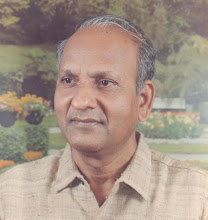
Born in 1932 at Mudinepalli, near Gudivada, Krishna Dist. Andhra Pradesh, received Bachelors degree in Civil Engg., from Viswesaraiah Engineering College, Banglore (1956) and Masters Degree in Environmental Engineering from Rice university, Houston, Texas, (USA) (1962), Ph.D (Hony). Former Head of the Department of Civil Engineering and principal of College of Engineering, Andhra university.Formerly Hony.Professor in Andhra University,Manonmanian Sundarnar University,JNT University. Fellow of the Institution of Engineers,India Recipient of the University Grants Commissions National Award "Swami Pranavananda Award on Ecology and Environmental Sciences" for the year 1991. Recipient of Sivananda Eminent Citizen Award for 2002 by Sanathana Dharma Charitable Trust, Andhra Pradesh state. Presently Working as Director, centre for Environmental Studies, GITAM University, http://www.geocities.com/prof_shivajirao/resume.html http://www.eoearth.org/contributor/Shivaji.rao