Tuesday, February 12, 2008

ENVIRONMENTALISM AS TRUE SPIRITUALISM

Editor Prof.T.Shivaji Rao
Government of several countries are generally more bothered about National security which deals with threats across the borders from other countries but rarely do the talk about threats to the environment within the country. Just as Governments look after maintenance of armed forces they should protect the land together with what it harbors on the surface and underneath such as air, water, soil, forests and wild life crops and mineral wealth. Just as food security is defined as physical and economic access to food for all the people at all times, environmental security should encompass all the plans dealing with safeguarding public health and all the environmental assets for optimum utilisation for ensuring a reasonable level of public health and safety,economic development,national welfare and human survival of the present and future generations. There is a sense of insecurity on the global food situation due to the explosive population growth particularly in the developing countries and the high consumption oriented and luxurious styles of living adopted by the developed countries which are held responsible not only for garnering the vast natural resources of the globe but also for causing most of the global environmental problems such as greenhouse gas effects, ozone depletion, acid rains, marine pollution and destruction of wild life and tropical forests endowed with unique biological wealth of inestimable value to mankind all over the world.
The startling facts on the ever growing shortage of drinking water and escalating rates of infectious diseases in the poor countries clearly indicate the unhygienic living conditions of millions of poor people but also the insensitivity of the administration to tackle the environmental decay. The basic subsistence level human needs of food, water, clothing, housing and health are not available to more than half of the global population. While large scale morbidity and mortality prevail in rural areas due to lack of safe drinking water and hygienic waste disposal facilities, the problems of pesticide residues in food is adding a new dimension. Even in metropolitan cities too the piped water supply is highly contaminated and the air pollution from industries and automobiles is causing high incidence of allergies, asthma and other respiratory and almost incurable diseases like AIDS. Ozone depletion is causing loss of natural powers of immunity resulting in increased susceptibility to many diseases like malaria, dysentery, diarrhoea, infectious hepatitis and enteric fevers particularly among the sensitive population including millions of infants, old people and pregnant women among poorer sections of society in all countries .The water we drink, the air we breathe, the food we eat are all so polluted that their combined burden on human health is increasing day by day.
The escalating rates of urbanisation, industrialiation andpopulation growth in developing countries is constantly adding to the biological and chemical contamination of the environment. Today, at the global level, there are 1700 million cases of tuberculosis, 270 million of malaria, 90 million cases of filaria, 10 millions cases of leprosy, 10 million cases of guinea-worm, 480 million cases of amoebiasis, one million cases of typhoid, 2000 million cases of Hepatitis-B (jaundice), 900 million cases of hook-worm, 120 million cases of sexually transmitted diseases, 10 million cases of AIDS/HIV virus and 7 million cases of cancer. Out of 10 million caes of AIDS infected people about 5 lakhs are sick with AIDS. Among the 1700 million people infected with tuberculosis, 20 million are sick. Environmental factors are responsible for 200 million cases of mental disorders, 90 million cases of drug abuse, 12 million deatths due to cardio-vascular diseases and 5 million deaths due to pneumonia. India is on the top of 15 countries that account for 75% of childhood pneumonia cases in the world. India has 44 million pneumonia cases, China has 18 million, Pakistan 5million and Nigeria has 5 million cases. About 150 million cases of pneumonia occur annually in children under 5 years in poor countries accounting for morethan 95% of all new cases worldwide. While 2 million will die for the disease about 20 million require hospitalisation. While 14% die during infancy, 16% under 5 years of age die in India. More than 150 million urban dwellers are exposed to high levels of noise pollution which is increasing day by day moreover the escalating ratesof urbanisation, industrialisation and population growth in developing countries like India is constantly adding to the biological and chemical contamination of the environment. with the result that almost all the natural water courses are so much polluted that many people are forced to spend huge amounts for bottled water to protect their health . Under these conditions of growing insanitation and environmental degradation not only the degenerated diseases but also the preventable communicable diseases are making a mockery of the objectives of a welfare state and such a deteriorating situation cannot make any socially responsible scientist to have a sound sleep as has to discharge his fundamental duty to safeguard the environment as envisaged under article 51 A(g) of the constitution. 
 ENVIRONMENTAL SCIENTISTS AND TECHNOLOGISTS MUST BECOME SPIRITUALISTS:
In order to confirm to the definition of positive health it is a duty of every responsible scientist and the citizen to not only prevent the spred of infectious diseases and correct physical deformaties but also promote mental health, social health and spiritual health in order to fulfil his own obligations as a humanbeing for seeking his own enlightenment for transformation into divinity of which he is an inalienable part. Today with the rapid advances in the fields of biotechnology, bioremediation, phytoremediation, genetics and stemcell threapy it is possible to not only prevent, control but also manage all the problems of pollution, environmental disruptions and decaying public health and hence the modern scientists have to play a dynamic role to restore natural balances and protect man and nature.
The global environmental problems like Ozone depletion,climate changes,wars,ocean pollution by industrial and nuclear wastes,escalating pesticide use and their damaging impacts on man and nature are making things go from bad to worse day by day just because a hand ful of greedy industrialists and business men in almost all countries are exerting undue influence over the decision-makers to choose the wrong methods in place of the right methods of national development that confer economic benefits to the vested interests while being detrimental to the vast majority of public interests.

There is an urgent need to utilise the perspecives of physical and spiritual sciences to activate the inherent ethical,moral and spiritual values lying dormant in the decision makers and the business lobby so that their attitudes get slowly transformed into the inherently more humane ones in place of the existing purely artificial materialistic ones as inherited from the imperialistic cultures.
It is said that a healthy body and a healthy mind go together and with it coexist a healthy community, a healthy society, a healthy nation and a healthy world. Unless the physical body is kept in sound condition, the mind cannot be healthy to maintain harmonious and healthy relationships with man and nature. Man does not know that indiscriminate destruction of forests, wildlife and habitats of animal and human populations amounts to sinning against the Creations of The Almighty. Man should desist from cutting the branch of a tree on which he is sitting and for this purpose he must have a sound consciousness and that is possible if the body and mind are kept in a healthy state: Consequently we have to restore the quality of environment by improving it in all its phases by stages to restore the health and welfare of man and all forms of life on which he depends for his survival.
It is said that the conquest of the physical body and the vital self has been achieved in the past by the purification of emotions and clarification of the intellect. While the purification of the emotions has been achieved by morality and religion, the clarification of the intellect has been achieved by science. And through science the above uplifting forces have been working in all the moral societies. At present in most of the societies we find increasing levels of moral degradation and religious fanatism that are leading to chaotic conditions and conflicts. Science has not only helped to promote food production, escalating comforts and luxuries but also produced several side effects including polluted environment. Philosophy has not percolated into the human societies to enable them to sustain economic and social order and world peace. Under these circumstances some of the intellectuals envisage that the conquest of the baser man can be accomplished by transforming him into a superman and it can be achieved only by dedicated practice of Yoga based on simple living and high thinking.
The object of yoga is the union of the human individual (soul) with the Supreme being (Universal and transcendent existence) and of the present nature of the humanity with the Eternal, Supreme or Divine nature. It is said that there is a secret soul in us which is our true person and there is also a secret self which is our true impersonal Being and Spirit and the purpose of yoga is to unveil that Soul and that Self.
Until the dawn of a developed thinking mind in matter (life form) the evolution had been influenced subconsciously (or subliminally) by the automatic (mechanical) operation of Nature but not by the self aware aspiration, will, intention or seeking of the living being. However man found that there can be a higher status of consciousness than his own and the evolutionary stimulus is there in his parts of mind and life and the aspiration to exceed himself is delivered and (is ) articlate in him. The yoga is turning of the human soul from the egoistic state of consciousness 9absorbed in the outward appearances and attractions of worldly things) to a higher state in which the transcendent and Universal can pour itself into the individual mold and transform it. The first determining element of Siddhi is, therefore the intensity of turning, the force which directs the soul in world. The measures of that intensity of turning are the power of aspiration of the heart, the force of the will, the concentration of the mind, the perseivarance and determination of the applied energy. It is the zeal of the whole nature for its divine results, the hearts eagerness for the attainment of the divine, that devours ego and breaks up the limitations of its narrow mold for the full reception of that which it seeks, that which being universal, exceeds and, being Transcendental, surpasses even the largest and the highest individual self and nature.
The acceptance of a new spiritual idea-force and upward orientation in the being, an illumination, a turning that is the momentous act which contains as in a seed all the results that the yoga has to give. The mere intellectual seeking for the Higher is ineffective unless it is ceased on by the heart as a desirable one and by the will to be done. Truth of the spirit is not to be merely thought but to be lived and to live it demands unified single-mindedness of the being. He who seeks the divine must consecrate himself and to God only.
Aspiration of the psychic being is for the opening of the whole lower nature, mind, vital, body to the divine and for the transformation of the mind, life and body by the descent of the higher consciousness into this instrumental being and nature.
Desire or demand comes from the mental or the vital; But a psychic or spiritual need is a different thing. The psychic never demands but aspires and as complete trust in divine or guru and patiently waits for the right time for divine grace. It puts pressure not on the divine but on the nature, placing a finger of light on all the defects there which obstruct realization and filters out all that is mixed, ignorant or imperfect with the nature till it has got perfectly open to the divine free from ego, surrended, simple and right in the attitude and all movements. This must be established fully in the mind and vital and in the physical consciousness.
What is necessary for realization is that one part of the being, particularly the Central will when it says with conviction “I want only You” then everything comes as though there were a perfect and absolute consciousness organizing around you all things. The Divine will come without your seeing Him and removes the obstacles in your path to solvation and if you are devoted He will remain to close you and all the rest will go away due to a higher Grace. If this aspiration and Yoga is practiced properly the Meditator and meditation get united and for the success of this endeavour the individual must be always in a state of positive health and to maintain positive health all people must work hard to restore the quality of natural resources like water, air, soil, flora and fauna on which human life depends. Any positive action in ensuring the quality of environment, public health, social welfare and sustainable development amounts to service to fellowmen and thereby service to God. Hence the practice of true environmentalism in the service of your neighbours and all forms of life created by God is bound to propel you in the long term into the kingdom of God.

POSITIVE HEALTH - UPANISHADS

I.KATHOPANISHAD
To know the truth man must learn that good is one thing, while the pleasant is another. Wise men choose the good and attain happiness while fools are attracted by the pleasant (pleasures) and perish due to ignorance and get into the cycle of births.

The obstacle to attain Higher Life is the identification of self of a person with his body. Man has to find this soul within. He must realize divinity of eternal spirit within. By concentrating the mind on inner Spirit, man finds Divine character of his own Soul and its inherent freedom. Due to attachments to worldly objects man cannot see the Spirit within. Realisation comes to a person whose Self yearns for Self Realization that leads to detachments and it does not come from books. Realisation comes due to grace of the Supreme Spirit that dwells within man. The Soul is divine in origin. The Atman resides in the hearts of living beings. Whoever is detached experiences the Spirit within him. The journey of life may be compare and as follows:

1.Body = Chariot
2.Senses= Horses
3.Mind=Reins
4.Driver= understanding (Individual,intellect)
5.Soul ,Self = Rider (owner)
6.Road = Worldly objects

Jivatman is the individual Soul enmeshed in the body-mind complex. A disciplined mind control senses and attains goal of the life, that is abode of Vishnu (liberation). A man of impure mind and uncontrolled senses will get into samsara or cycle of births.

If individual looks back towards the Rider, he merges with Soul. If he is attracted by worldly objects he will be drowned in ignorance and gets into cycle of rebirths. So if man is wise he controls his outer mind with the inner mind and gets realisation. People with understanding (true knowledge)turn their minds inwards and realize the Self within. People with steady mind, realizing what is truly lasting do not turn their thoughts to transient pleasures.

Soul is in the body like fire in the wood. Fire is the same in a lamp or forest fire and like wise soul is same (Being)in all and an enlightened mind sees the transcendent Oneness of all. Illusion is more due to attachments and detachment leads to enlightenment. Personal discipline and meditation that help Soul to detach from worldly things is known as Yoga.

Antaratma is lodged in our hearts, sheathed like the reed plant under its blades. Man should abstract it with understanding, with detachment. The Spirit inside is pure and immortal and is thumb size within the heart. With understanding separate the spirit from the sheaths of the body and know that the self is deathless. Atman or Self is also called Purusha (Divine Being)and is realised by a man of refined and subtle mind through concentration and spiritual teachers guidance, pratyagatman is the self within and a good person turns the gaze of a senses and mind inwards and realises him The residence of the Soul in the body makes the body full of life and consciousness. Antaratma (inner Self) not only appears in different forms but also simultaneously exists in his own,, outside them. Like the Sun who shines on both pure and impure waters and remains untainted, Brahman also remains untainted forever. Brahman is also called prana and sustains the whole creation and to know him practice Aadhyatma with the guidance of a competent guru. For realisation a man must know the art of separating the Self from the body and this can be attained by a direct experience of the inner Self.

II.EESAVASYOPANISHAD
The whole world is permeated by Isa , The God and hence it belongs to God and not to the people who may enjoy it with detachment and hence people are prohibited to develop greed for other’s wealth and properties. People may live for 100 years with detached attitude and outlook So that their actions or karmas will not be tainted and thereby lead to suffering. If people trespass, they will suffer by a hell.

Atman is the inner and the true Self of all. A person who realises Atman sees the same Universal Spirit in all and loves all by ignoring duality. Atman at the Universal level is all pervading, effulgent absolutely pure and is Supreme ruler.

Avidya relates to vedic rituals and vidya to meditation on vedic deities (Gods) preceded by Jnana about them and people who practice the former go to Pitruloka while the later go to heaven and after exhaustion of the religious merit they return to earth. Unfortunately the pleasures of these worlds impress the psyche to aspire for them again and so people resort to vedic methods entering into building darkness (Andham, Tamah). By practicing a balanced combination of the vedic rituals and ordained duties of ones life leads to purification of the mind and when such a person meditates on God, Moksha, liberation or immortality is attained.

III. KENOPANISHAD

By what experiences or instruments can man understand the Supreme Spirit? By whom? Senses or reasoning cannot grasp Brahman because the subject, object and means are identical. It is Brahman by which the understanding itself functions. Supreme Spirit is that by which the mind thinks. It is that which enables eye to see, ear to hear and breath to move. These functions depend on Brahman and Soul. The senses or mind are unable to comprehend Brahman. Body is not Soul, life is not a sum of all the functions of the body but is a function of the Highest Spirit. One can get vision of Supreme Spirit not by reasoning but only by an awakening. What sleep is to wakening, Soul is life to realisation. Self discipline gives strength of Spirit and to a person thus strengthened, Knowledge gives immortality. During a dream a person may experience fever but on waking up he realizes healthy life and so does Jnana gives immortality to man. All Beings are like electrical bulbs which glow by the power from the Supreme Being who is unknown to them. Tapas dama (Self control) and Karma are the means of attaining Brahman.
IV. SWETASWATAROPANISHAD:

The Soul in man loses consciousness of Lordship and gets chained to the body and enjoy through senses. If man realizes the divinity of his soul he becomes liberated.

Iswara rules over Soul and material nature. Man loses illusion of the world by contemplation and meditation until he gets realisation of true nature of God, matter and Soul. Divine Self that is hidden within ones self can be made manifest by practicing truth, meditation and control of mind and senses which is penance (Tapas). The Pranava enables the spirit to be perceived. The Divine Spirit that brought the Universe into Being, the Supreme Soul, ever dwells in the hearts of the men and is revealed by the heart and intellect combining and controlling the mind and by meditation. Isa lives in the heart of man can be perceived not by eye but by the heart and a person who perceives Him by the heart attains immortality. In a person discovers that God is the inner Soul of every Being and also the over seer of all the activity. God lives in all forms of life. He is the eternal witness, the conscious Being within, standing apart from that in which He abides and unqualified.

The direct teaching by a Guru or Father is essential and bookish knowledge is not enough. More important is the prerequisite of good character and restraint of mind and senses for realisation of the highest Truth. Otherwise, knowledge leads to harm and not to the good. Without purity of character restraint and humility and the guidance of Guru, the utterance of I am God would lead to arrogance, atheism.

V. MUNDAKOPANISHAD

Lower knowledge refers to Vedas and other subjects while higher knowledge is that by which the Ever-existing (Brahman) is realized. Rituals do not give knowledge of self. Soul is like the spark that is thrown out and reabsorbed by the glazing fire and it is of the same nature of the fire and does not exist apart from it. All life, qualities, functions and activities are forms of that single Energy (Brahman). Everything that breath or twinkles moves and lives in Him. All ideas known and unknown issue out of his presence. To perceive this Absolute Foundation of all existence, mind must be concentrated on it. Your self, the arrow must be merged by concentration in the target, the Brahman. The indwelling Supreme Spirit and the Individual Soul are like two birds on a tree clung to each other. One eats the fruits of the tree and the other looks on happily. One is attached to works and the other is free. If a man sees the Universal Ruler in himself is freed from passions and becomes one with the Universal. When the heart is cleansed Brahman is revealed and He is seen shining like burning light within One self. Truth is only pathway to God. The Spirit that yearns for self realisation realizes itself. Yoga that is detachment and self discipline purifies the mind and enables to perceive the Truth. Persons whose understanding is enlightened and purify become one with the Universal Spirit. They join the Supreme Being and lose themselves in Him just like all the Rivers join and lose themselves in the Great Ocean.

VI. CHANDOGYOPANISHAD

It deals with the root cause of life. Out of Nothing, nothing could come. Non-Being cannot produce Being and consciousness cannot come out of nothing. So we must believe that there was a first cause, that is Sat, that is Being with consciousness. Sat willed that it may expand and multiply and thus light (Tejas) was produced. The Spirit in Tejas again willed for expansion and multiplication and thus water was produced. Again the spirit in water willed to expand and multiply and it produced all living things in the world. Like the seed which contains the tree Sat which you are contains the Universe. Just like a lump of salt dissolves in water and disappear so is Sat lost from the view but is still imminent in everything in nature. A man who gives up his desires that blind his vision finds his way to the Sat and thereafter waits for his natural death.
V. TAITIRYOPANISHAD

This deals with the moral and cultural values of life like speaking the truth doing ones duties and study of Vendantas. Respecting parents and teacher giving gifts with faith. In case of doubt about right or wrong follow the example of local pious elders. The food and air are sacred forms of Brahman.
All this material has to be studied and digested to make it part of oneself to know the Truth and there are people who had experienced the Absolute.Among those was the famous philosopher,Jiddu Krishna Murthy who propounded revolutionary concepts and it is desirable to know them to improve our own understanding of the relationships.We have to study different philosophies to understand how each evolved person has experienced bliss by following a particular path,remembering the saying that all natural flowing streams and rivers ultimately join the vast ocean.Dr.Annie Beasant chose Jiddu krishna Murthy after sensing that he has the talent to become the world teacher and got him trained in England at Oxford.In 1922,Jiddu Krishna Murthy{J.K.} had a Mystical experience which in his own words is;"I was supremely happy for I had seen....Nothing would be the same again. I have drunk of the clear and pure waters at the source of the foundation of life and my thirst was appeased.Never more could I be thirsty.I have stood at the mountain top and seen the Light"In August 1929,he said,"Truth is a pathless land and you cannot approach it by any faith whatever,by any religion or any sect.I do not want to belong to any organisation"

Jk said"Every individual shall discover Truth for oneself without feeling committed to acceptance of any Religion or Sect of any godman, of any Guru" It was really shocking .Why? "To follow another is evil because it breeds authority,fear and imitativeness"and this essage is under the topic"Are spiritual leaders necessary?"This is shocking. But Jk says"Everyman is a Guru to one self.Look inward,not superstitiously but with a clar and pure mind and you will find all the guidance you want" In Today's world of many self-proclaimed godmen and sects and religions of dubious values,one must ponder over this philosophicl approach to restore peace and harmonise the attitudes and outlooks of people by discussing these basic tenets to get redemption.
I feel that in order to get the basic concepts under the grip,one has to study,discuss and debate the salient features of any philosophy and have the guidance of a Guru and when you attain a certain stage of awareness,then you may find that your personal experiences prove to you that "To Know is To Be" and" Being leads to Becoming"and "To think is great but To be Thoughless is far Greater" when you enjoy Bliss as your individual Soul merges into the Divine.


IMPROPER SITING OF NUCLEAR PLANT AT KOODANKULAM

Prof.T.Shivaji Rao,

Director, Centre for Environmental Studies,

Gitam University, Visakhapatnam-530 045

1. Reactors at Koodankulam:

As part of their expansion program in Nuclear Energy, the Atomic Energy Commission purpose to establish at Koodankulam a 2 x 1000MWe plant, with pressurized water-cooled reactors which like high powered racing cars are temperamental and demand constant attention. The nuclear fission occurs in 100 tonnes of Uranium Oxide fuel in 50,000 closed packed fuel rods, the Zirconium alloy tubes of half inch diameter. These fuel bundles the reactor-core sits in a thick steel pressure vessel through which cooling water is pumped at 18 tonnes per second to carry away the heat generated during nuclear fission and use it to produce steam and electricity through a turbo generator. The fuel gets yellow-hot at its core, attaining a temperature of 4100oF (2250oC) while the metal casing around the fuel is kept at 650oF (350oC) by the cooling water. If due to an accident the coolant water gets interrupted far just a few seconds the fuel temperature rises rapidly and the Zirconium casing begins to break at 1800oF (1000oC) and melts at 3370oF (1850oC). The actual danger comes when the hot fuel begins to lump together in a molten mass that can explode the containment or seep into the ground through what is known as Chinese syndrome and release massive quantities of radioactivity into the air, water and soil environment.

In order to avoid the core melt-down, the experts have provides a series of safety devices. One major line of defence is Emergency Core cooling system which Provides instantaneous water supply that keeps the core from melting. Another line of defence is the concrete containment that surrounds the core and the pressure vessel so that even during a loss-of-coolant accident, no radioactivity will escape into the outside environment. Such Engineered safety measures also fail sometimes.

2. Places to be evacuated during accident at Koodankulam:

http://envfor.nic.in/legis/hsm/gsr347.htm [ Notification on Emergency Response by Govt.of India]

http://www2.oecd.org/guidingprinciples/toc_index.asp [Chemical Accidents]

http://hazmat.dot.gov/pubs/erg/erg2004.pdf [Emergency Response system,pages.270-281]

When an accident at the nuclear plant releases enormous quantities of radio-activity into the air, water and soil environment, there will be immediate fatalities and long term genetic damage among the exposed populations. All the people within the zone of influence from the reactors must be evacuated.

Evacuation must be completed within:

6 hours for 2 to 5 km

12 hours for 5 to 25 km

24 hours for 25 to 75 km

48 hours for distances beyond 75km; downwind from Koodankulam as per the British accident scenario for the 100 MW. Size-well reactor, based on a wind-sped of 5 m/sec rain-fall of 1mm per hour and neutral stability conditions of the atmosphere.

After through scrubbing and decontamination of lands equipment and residences due to radio-active pollution from an accident, people may be permitted to return to their original residences along with their cattle and other properties after about 3 weeks upto 170km, one year upto 140km, 5 years upto 115km, 10 years upto 98km and 20 years upto 77km distance from Koodankulam nuclear plant. Depending upon the weather conditions during the accident, certain places will be more affected than others. The villages, towns and cities that will be effected during an accident are indicated in the figure.

Many villages of Ramanathapuram, Tirunelveli and Kanyakumari of Tamil Nadu and Trivandrum and Quilon districts of Kerala will be affected seriously. Killakkarai, Sattirakudi, Abiramam, Virudunagar and Watrap of Tamilnadu and Gudalur, Thekkadi, Vengamala, Patalam and Karunagpalli of Kerala lie within 170km. Sayalkudi, Nattakkadu Sivakasi and Settur of Tamilnad, Edathora, Kundara and Quilon lie within 140km Kamudi, Aruppukottai, Srivilliputtur and Rajapaliyam lie in between 140km and 170km. Karilgatti, Kalugumala and Puliyangudi of Tamil Nadu Tenmala, Kadakkal, Attingal and Kadinamkulam of Kerala lie within 115km. Taruvaikulam, Kadambur, Tirumalapuram and Tenkasi of Tamil Nadu and Palad and Attipara lie in between 98km and 77km, Sayarpuram Pudukkottai, Tirunelveli, Ambasamudram lie in between 98km. Tuticorin, Kayattar and Trivandrum lie inbetween 98 km and 77km, Sayarpuram Pudukkottai, Tirunelveli, Ambasamudram, Munnar, Balarampuram, Neyyattinkara, Nanguneri, Panakudi, Kolachel, Nagercoil and cape comorin lie within 77km from the Nuclear plant site.

(Based on the book "Nuclear Plants- The Silent Killers" published by the author in April 1989)


IMPROPER SITING OF NUCLEAR PLANT AT KAIGA

Prof.T.Shivaji Rao,

Director, Centre for Environmental Studies,

Gitam University, Visakhapatnam-530 045

I) Reactors at Kaiga: It is proposed to establish a nuclear plant (PHWR) at Kaiga in Karnataka with an initial capacity of 2 x 235 MW and an ultimate capacity of 2000 MW . In the proposed pressurized heavy water reactors the core is located in a steel vessel known as Calandria that is filled with heavy water and kept at atmospheric pressure. Low pressure heavy water is used as a coolant, permitting natural uranium as fuel. The fuel rods separated laterally by spacers consist of natural uranium dioxide pellets clad with Zircaloy. Without reactor shut down one machine inserts fuel bundle into pressure tube at one end while spent fuel bundle is discharged at the other end. As in a pressurized water reactor, the primary circuit of PHWR consists of several loops. For each loop a number of pipes emanating from individual pressure tubes feed into an outlet header that is connected to a steam generator main coolant pumps and inlet header that again feeds individual pressure tubes. The coolant temperature and void coefficients are positive. Primary shut-down is provided by vertical absorber rods immersed between the pressure tubes with secondary shut down, if necessary by injection of chemicals under pressure into the moderator. Double containment is provided for more safety.

II) Reactor Safety Problem: Although pressure tube design has positive and negative points from a safety point, the possibility of uncontained fuel melting accidents is not eliminated in this design. Even if pressure tube design precludes the chances of massive pressure vessel failure, the long length, surface area and complexity of the primary system piping results in greater possibilities for loss of coolant accidents. On-line refueling provides additional means by which loss of coolant accidents can be initiated. As the pressure tubes are exposed to the full neutron flux, they experience the consequential weakening effects. Due to deuterium-zirconium interact ion, delayed hydride-cracking occurs in the piping system. Moreover the natural uranium heavy water void co-efficient of reactivity is positive and any loss of coolant accident leads to power execursion. A loss of coolant accident coupled with scram failure leads to rapid melting of fuel and possible common mode breach of the containment. While heavy water results in large and hazardous tritium inventories, extensive use of zirconium in the core provides for a large zirconium-system reaction potential. The multi unit station design may ultimately result in common mode failures which have not been studied in depth in safety analysis in the Indian environment with considerable degree of emphasis on indigenization.

III. Alternate Sites: As practiced in some European states, Tunnels can be driven in one of the mountains on the Karwar Coast for accommodating the reactors; Other infrastructure facilities can be provided on the land, since service water supply forms 5% to 10% of the project cost. Sea water can be used for condenser cooling as in Madras and Tarapore plants. The low summer storages in the reservoirs on Kali river are bound to exacerbate the radioactive pollution though biological magnification of radioactivity in the food-chains and food webs of the aquatic eco-systems. Extensive deforestation will cause siltation of the reservoirs soon. Alternate sites on the islands around Karwar, Basavarajdurg, Muredeswar, Bhatkal and Udipi can be considered if pollution of inland water is to be avoided. Similarly the coastal sites at Kokarn, Bailur, Kumata may be considered for locating the reactors underground on the beaches or in the tunnels to be formed in the mountains. Many other sites on the west cost near the mouths of the rivers may be chosen on considerations similar to those followed in selecting the sites for the reactors at Kalpakkam and Tarapore.

By siting the proposed nuclear platn at Kaiga in close proximity to a major population centre at Karwar Naval base, the nuclear experts are deliberately violating the norms even if public health and environmental safety will be in jeopardy. Even the defence forces and personnel of the “Sea-Bird” project may be adversely affected. The dense and natural forests of the tropics need not be destroyed. In case of power failure the reactors are always provided with alternate sources of energy from a few independent power generators that go into action within a few seconds or minutes. Hence the special facilities or secondary importance such as power-lines, rocky foundations and reservoir storage on kali river cannot over-ride the crucial aspects of environmental protection in Karwar district and its vicinity.

IV. Places to be evacuated during accident at Kaiga: After thorough scrubbing and decontamination of the land sand equipment due to radioactive pollution from an accident people can return to their original houses along with their cattle after one year upto 140km after 5 years upto 115km and after 20 years upto 77 km distance from the nuclear plant. Depending upon the weather conditions during the accident, certain areas will be more affected than others. The villages, towns and cities that lie within the zone of influence of an accident in the rectors at Kaiga are marked in the figure. While Karwar, Yellapur, Londa, Honavar, Kumta and Ankola of Karnataka, Chavil, Quepem and Madgoan of Goa lie within 77km. Bhatkal, Siddapur, Sirsi, Hangal, Mundgod, Kalghatgi, Haliyal, Khanapur, Hubli and Dnarwar of Karnataka and Panaji, Ponda Bicholim and Mapuca of Goa fall within 115km distance from the proposed nuclear plnt. While Bainduru, Sagar, Sorab, Haveri, Shiggaon, Savanur, Kundgol and Belgaum of Karnataka and Chandgad, Amboli and Santvadi of Maharashtra lie within 140km, Coondapur, Byadgi, Ranibennur, Shirhatti, Gadag, Nargund, Gokak and other places close by lie within 170km from Kaiga. Evacuation must be completed within 6 hours for 2 to 5km; 12 hours for 5 to 25km; 24 hours for 25 to 75km and 48 hours for distances beyond 75km from Kaiga as per the British accident scenario based on a wind speed of 5m/sec; rainfall of 1 millimeter per hour and neutral stability conditions.

(This article is based on the Book "Nuclear Plants-The Silent Killers" published in April 1989)

HAZARDOUS SITING OF NUCLEAR PLANT AT NAGARJUNA SAGAR RESERVOIR

Prof.T.Shivaji Rao,

Director, Centre for Environmental Studies,

Gitam University, Visakhapatnam-530 045

http://hazmat.dot.gov/pubs/erg/erg2004.pdf (Emergency Response System)

NAGARJUNA SAGAR NUCLEAR PLANT

The Vengurlekar Committee of the Atomic Energy Commission having considered the impact of low flows in summer into rivers and lakes and increasing need for water to cool the condensers suggested that the reactors must be located on the sea coast. The location of the Tarapur and Kalpakkam reactors are in tune with the stipulated siting criteria. Experts criticized that Kota was not a suitable location for he Rajasthan Atomic Power Plant and the fish culture in Rana Pratap Sagar is reported to suffer from high levels of radiation whose long-term consequences on environment will be more clearly seen in the next few years. To avoid these problems the reactors are generally located on the coastal sites in Britain, Sweden and Norway. By violating all these norms why should the proposed nuclear plant be sited at Nagarjuna Sagar?

For a design basis accident in a pressurized water reactor, a core-melt down is accompanied by a steam explosion due to the contact of the molten fuel with the water that remains in the reactor vessel. Even if such an accident were to occur once in a million years, the radioactive substances are expected to get released into the atmosphere about 2.30hours after the accident. Although the population is likely to be moved radially away from the reactor upto about 30km. the adverse health impact causes 3300 early fatalities. 45,000 early illnesses and 1400 cancers per year. In Chernobyl people were evacuated upto 30km around the nuclear plant. In addition to loss of life, damage to public health and properties estimated at $5,000 deformed off-spring will be borne to humans and animals. Under the circumstances, opinions of experts must be taken into account before making a proper environmental assessment of the proposed reactor.

Nagarjuna Sagar:

Dr.David E Lilienthal, the first Chairman of the US Atomic Energy Commission in his book “Atomic Energy – A New Start” has admitted belatedly that “nuclear technology is not really so advanced as was assumed in 1950’s. It is not dependable enough. It is not safe enough”. And he rightly questioned “the moral right to promote and sell such a complicated, immature and fundamentally unsafe nuclear system particularly to societies whose technology is far less developed”.

In fact, public acceptance of nuclear plants today and that too in the aftermath of Chernobyl, is a coin with two sides. On the one side, the safety of the reactors has to be ensured through proper understanding and application of the scientific principles of physics, technology, engineering quality control and non-destructive testing and inspection. On the other side the nuclear industry after making the greatest efforts to achieve the safety and reliability of the plant have to still promote the acceptability of nuclear plants not only to political leaders and officials but also to the public by pointing to the golden balance to be struck between the energy, economic, ecological and public health objectives of the project. In short, the Atomic Energy Commission must prove to the public that it has not only good physicists, technologists, safety engineers, quality inspectors and dedicated workers but also human experts who recognize that there is more to perpetuate civilization than bare technology.

These radiation safety criteria require the establishment of an exclusion zone around the plant without access to the public and a sterilised zone around the exclusion zone within which only natural growth of population is permitted. The population distribution upto 30kms around the plant is kept in view to ensure that in the unlikely event of a serious accident, effective emergency actions, including evacuation of population can be taken up immediately. The sterilized zone is often called as a low population zone with very few people who can be evacuated should the need arise. According to the siting criteria approved by the experts in 1963, the population upto 16km around the reactor should be within 10,000 and upto 40km it should be below one lakh. The Russian stipulated long ago that the distance between a major town and the reactor should be 35km. According to the US standards that within 20km distance from the reactor, the population should not exceed 25,000.

By stating there is no township with a population exceeding one lakh within 30kms from the proposed site of the reactor at Nagarjuna Sagar Dam, the Atomic Energy officials cannot deny the violation of safety norms and environmental protection guidelines as Vijayapuri township with about 40,000 population lies within 16km of the site. Moreover the tiger sanctuary, the historical museum of ancient Buddhistic monuments, tourist centre and the major Sagar lake with abundant fishery resources lie within close proximity of the reactor site. Vijayapuri town does not possess a road lay-out with connections in different directions and the existing mountainous tract with many curves becomes an obstacle for evacuation the population during accidents.

Since the waters intended for drinking, food fisheries and animal husbandry will get polluted public health in coastal districts as also Nalgonda and Khammam districts is bound to suffer.

If the socio-economic consequences scenario of he SIZE-WELL reactor of UK for an accident is super imposed over Nagarjuna Sagar, people upto Vijayawada will have to be evacuated during the Monsoon period (June to September) and people upto Hyderabad will have to be evacuated during the winter season. The procedures for evacuation, rehabilitation and the consequences of an accident will be similar to those already predicted for Koodankulam Nuclear Plant.

All the people within the zone of influence from the reactors proposed at Nagarjuna Sagar must be evacuated. Evacuation must be completed within 6 hours for 2 to 5km, 12 hours for 5 to 25km; 24 hours for 25 to 75km and 48 hours for distance beyond 75km down wind from Nagarjuna Sagar as per the British accident scenario for the 1100MW. Size-Well reactor based on a wind speed of 5 meters per second.; rainfall of 1 milli-meter per hour and neutral stability conditions of the atmosphere.

After thorough scrubbing and decontamination of lands, equipment, roads and residences due to radioactive pollution from an accident people may be permitted to return to their original homes along with their properties and cattle after about 3 weeks upto 170km one year upto 140 km, 5 years upto 115km, 10 years upto 98km and 20 years upto 77km distances from the Nuclear Plant site at Nagarjuna sagar. Depending upon the weather conditions during the accident, some places will be more affected than others. The villages, towns and cities that will be affected during an accident are shown in the figure.

While Vijayapuri, Devarakonda, Miryalguda, Nalgonda, Suryapet, Huzurnagar, Macherla, Gurazala lie within 77km, Hyderbad, Bhngir, Jangaon, Kodada, Khammam, Jaggayyapet, Nandigama, Sattenapalli, Narasaraopet, Chilakaluripet fall within 115km distance from the proposed nuclear plant site. While Wanaparti, Kolhapur, Guntur and Vijayawada lie within 140km, Sangareddi, Tiruvur, Nuzvid,Gannavaram, Vuyyuru, Tenali Nidubrolu and other important towns and villages in the districts of Medak, Nalgonda, Warangal, Khammam, West Godavari, Krishna, Guntur and Prakasm districts lie within 170km distance from Nagarjuna Sagar.

Without placing the risk and environmental impact analysis reports before the people of Andhra Pradesh, the atomic energy experts are denying them their right to healthy living. Without sincre efforts to explain the levels of air and water pollution expected from the nuclear power plants and its waste treatment systems and their immediate short-term and long-term impact on health and environment they cannot force the State Pollution Control Board to grant permission and thereby sign the death warrant of the people.

In the light of the bombing of nuclear reactors in Iraq and Iran and the terrorist attacks on reactor sites in Spain and pilferage and theft of plutonium from some plants, how can any expert rule out any nuclear accidents due to bombing, terrorism, sabotage or human failure at Nagarjuna Sagar? Under the circumstances, the people of Andhra Pradesh should not blindly believe the atomic energy experts on their assurances of safety but must organize mass movements for locating the proposed reactor underground or in rock caverns at a safer place on the East coast around Gudur, Nellore, Machilipatnam or Visakhapatnam. They must demand for inherently safe reactors in place of the proposed unsafe ones.


WHY PREFER UN-SAFE REACTORS INSTEAD OF SAFER MODELS?

Prof.T.Shivaji Rao,

Director, Centre for Environmental Studies,

Gitam University, Visakhapatnam-530 045
American experts have recently developed such safe reactors for which the probability of a serious accident is zero, that is, a reactor whose safety depends not on the active intervention of safety systems (which with some degree of probability can fail) but on physical principles that insure the reactors safety without mechanical or human intervention but upon immutable physical principles that even in an emergency could not be abrogated.

Enlightened nuclear and environmental experts have been warning the industry and the Governments to renounce the current generation of reactors stating that no matter how extensive the safety measures are the reactor machines are disasters “waiting in the wings”. In fact General Atomics, an American firm is building a modular high-temperature gas-cooled reactor in Idaho-falls to produce tritium for nuclear weapons and to serve as a basis for a civilian reactor that would generate electricity. In the case of this new reactor proposed in Idaho for ensuring full safety, the designers deliberately restrict the core size and reactor out-put to 140 Mega-watts

In fact a large reactor built in Colorado before the advent of the modular-designs has utterly failed as its Helium circulator has broken down frequently. The secret of the safe reactor lies in its sand-grain sized fuel particles encapsulated in multi-layered glassy carbon spheres that trap radio-active fission products but transmit heat while remaining intact upto 3300oF. Since the maximum temperature that the fuel grains can attain in the spheres is limited to about 3000oF , the Uranium fuel cannot melt through the spheres under any kind of an accident. But the pressurized water reactors proposed to be built at Koodankulam in Tirunelveli district of Tamil Nadu are inherently unsafe. In these reactors fuel rods of about half-inch thickness attain temperature of 4100oF at the core while the casing temperature is maintained at 650oF by the cooling water. If the pipe breaks and water supply fails for just a few seconds, the hot fuel can destroy the metal casing which begins to break at 1800oF and melts at 3370oF. Although back up systems such as the emergency core cooling system and concrete containment are expected to ensure that no radio-activity will escape into the outside environment during an accident, still core-melt accidents did occur at Three Mile Island and Chernobyl plants. While the maximum fuel temperature of 3000oF is less than the fuel casing failure temperature of 3300oF in a safe reactor, the maximum fuel temperature of 4100oF is more than twice the fuel casing failure temperature of 1800oF in an inherently unsafe reactor.

Why Absolute Safety of Nuclear Reactors is impossible?

When the Swiss Government wanted to buy the US Reactors in 1973 , they demanded experimental proof that the dome containment would retain the radioactive pollutants released during a Loss of Coolant Accident (LOCA) Besides being expensive, since an actual test would be more dangerous than nuclear bomb testing, assurances on reactor safety are entirely based on tests on paper using simulated mathematical models. As such test results can not take into account the different permutations and combinations of malfunctions from defective materials, mechanical or human errors, sabotage, bombing, terrorism, missile hits, aero-plane crashes etc. they become invalid.

In other words, nobody can do all the necessary testing nor even anticipate what kind of tests are needed. At best, the experts may be able to simulate and estimate the answers to some of the questions asked by the people but do the people know all the questions that are yet to be asked for making the reactors absolutely safe for all time? Hence the proof of reactor safety could not be given and still has not been demonstrated.

But when the tests on the Emergency core cooling system designed to flood the core during a loss of coolant Accident were run at the National Reactor Testing Station in Idaho, mechanical failures occurred. When the tests were run during 1970-71 all the six tests conducted by the Aero-jet Nuclear Company failed. Subsequent experiments at Oak-ridge National Laboratoreis indicated that the Zircaloy-clad fuel rods of the Light water reactors may swell, rupture nd block the cooling channels, and thereby obstruct the emergency cooling water from reaching the core and such obstruction which holds back the emergency core cooling water leads to a catastrophe sometime or the other. Thus reactor safety is most often a myth!

Accidents in Atomic Waste Storage Tanks!

As a temporary measure most countries are storing highly radioactive wastes in steel and concrete tanks on the surface of he earth. The fuming nuclear wastes produce 9 kilo-watts of energy by radioactive disintegration per cubic meter and hence must be cooled all the time. However accidents occur in the storage tanks as detailed below.

1) The chemicals in the radioactive liquid wastes often cause corrosion of the containers. As a consequence of such corrosion, nearly half a million liters of radioactive waste seeped into the ground from the storage facility at Hanford Washington (USA).

2) If the refrigeration systems that cool the storage tanks fail due to power shortage, floods, earthquakes, human or mechanical failures or sabotage, the contents of the storage tanks would heat upto about 1000oC (1832oF) and cause an accident that would render an area double the size of Switzerland uninhabitable for many decades.

3) The water molecules in the storage tanks are split into Oxygen and Hydrogen due to radiation. If the ventilation system of the tanks were to fail and Hydrogen reaches the lower limit for explosion of 4% in the air, an explosion that can destroy the tanks along with refrigeration systems may occur.

Thus the location of he atomic waste storage tanks on ground surface is beset with substantial risks due to accidents that may cause serious radioactive pollution of air, water and the soil resources in the nearby and distant environments.

About Me

My photo
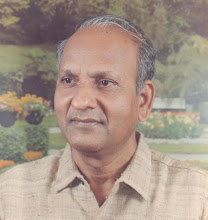
Born in 1932 at Mudinepalli, near Gudivada, Krishna Dist. Andhra Pradesh, received Bachelors degree in Civil Engg., from Viswesaraiah Engineering College, Banglore (1956) and Masters Degree in Environmental Engineering from Rice university, Houston, Texas, (USA) (1962), Ph.D (Hony). Former Head of the Department of Civil Engineering and principal of College of Engineering, Andhra university.Formerly Hony.Professor in Andhra University,Manonmanian Sundarnar University,JNT University. Fellow of the Institution of Engineers,India Recipient of the University Grants Commissions National Award "Swami Pranavananda Award on Ecology and Environmental Sciences" for the year 1991. Recipient of Sivananda Eminent Citizen Award for 2002 by Sanathana Dharma Charitable Trust, Andhra Pradesh state. Presently Working as Director, centre for Environmental Studies, GITAM University, http://www.geocities.com/prof_shivajirao/resume.html http://www.eoearth.org/contributor/Shivaji.rao